
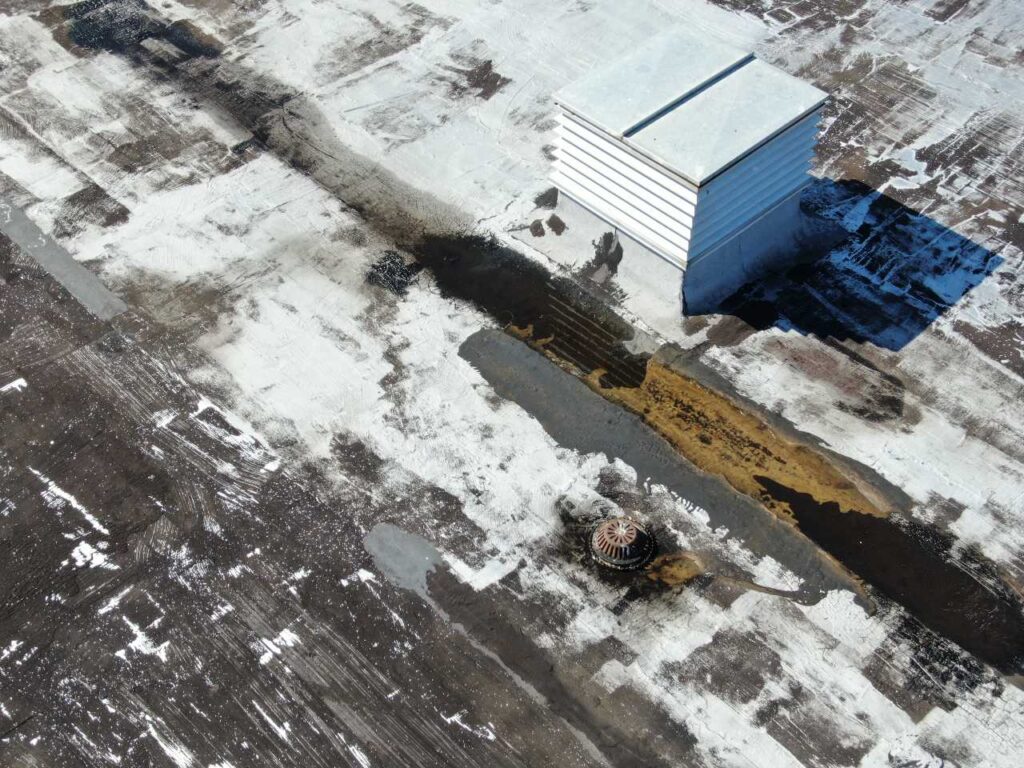
Freeze Damage Roof Repair in Austin, TX
- About
- Services
- All Services
- Built-Up Roofing Aust
- Commercial Roof Coatings Aust
- Commercial Roof Condition Reporting Aust
- Commercial Roof Inspections Aust
- Commercial Roof Leak Repair Aust
- Commercial Roof Maintenance Aust
- Commercial Roof Repair Aust
- Commercial Roof Replacement Aust
- Commercial Skylight Repair Aust
- EPDM Roofing Aust
- All Roof Systems
- Ballasted Roof Systems Aust
- Built-Up Roof (BUR) Systems Aust
- Cool Roof Systems Aust
- EPDM Roof Systems Aust
- Modified Bitumen Roof Systems Aust
- PVC Roof Systems Aust
- Silicone Roof Coating Systems Aust
- Spray Polyurethane Foam Roof Systems Aust
- Standing Seam Metal Roof Systems Aust
- TPO Roof Systems Aust
- All Industries
- EV Facility Roofing Aust
- Education Facility Roofing Aust
- Entertainment & Music Venue Roofing Aust
- Financial Services Roofing Aust
- Government Facility Roofing Aust
- Healthcare Roofing Aust
- Hospitality & Hotel Roofing Aust
- Logistics & Distribution Roofing Aust
- Semiconductor & Fab Roofing Aust
- Tech Campus Roofing Aust
- All Damage & Repair
- Fire Damage Roof Repair Aust
- Freeze Damage Roof Repair Aust
- Hail Damage Roof Repair Aust
- Insurance Claim Roof Documentation Aust
- Leak Damage Roof Repair Aust
- Storm Damage Roof Repair Aust
- Structural Roof Damage Assessment Aust
- Tornado Damage Roof Repair Aust
- Water Damage Roof Repair Aust
- Wind Damage Roof Repair Aust
- All Property Types
- Distribution Center Roofing Aust
- Manufacturing Facility Roofing Aust
- Medical Building Roofing Aust
- Multifamily Roofing Aust
- Office Building Roofing Aust
- Religious Building Roofing Aust
- Restaurant Roofing Aust
- Retail Roofing Aust
- School Roofing Aust
- Warehouse Roofing Aust
- All Capabilities
- Commercial Roof Condition Reports Aust
- Commercial Roof Inspections Aust
- Commercial Roof Moisture Surveys Aust
- Commercial Roof Zone Mapping Aust
- Competitive Bid Coordination
- Infrared Roof Scanning Aust
- Manufacturer Warranty Management
- Owner Rep Services — Commercial Roofing Aust
- Replacement vs. Recover Analysis Aust
- Roof Asset Management Aust
Post-freeze assessment and repair on Austin commercial flat roofs — membrane brittleness, flashing separation, and condensation moisture mapping after Central Texas freeze events.
February 2021 changed what Austin commercial building owners understand about freeze risk. Winter Storm Uri brought nine consecutive days of sub-freezing temperatures to Travis County — an unprecedented run for a city that typically sees freezing temperatures in single-digit annual occurrences. The sustained cold did things to Austin commercial roofing assemblies that a single overnight freeze never would: it caused membrane brittleness failures in EPDM systems not specified for sustained cold, it froze condensate lines that discharged water across membrane surfaces when they thawed, and it created vapor drive conditions inside roof assemblies that produced moisture accumulation in buildings that had never leaked before.
The roof damage from Uri showed up in two waves. The first wave was immediate: EPDM membranes that had stiffened in the cold cracked at movement points — seam edges, penetration flashings, parapet base flashings — when thermal contraction pulled at joints the membrane no longer had the cold-temperature flexibility to accommodate. The second wave came in spring 2021: buildings that had appeared undamaged after Uri began showing moisture evidence as the trapped condensation that had accumulated during the freeze migrated through insulation and into building interiors. Not every building that needed a post-Uri assessment knew it needed one immediately.
Austin's climate is cooling-dominant — roof assemblies here are typically designed and specified with the Austin summer heat load as the primary concern. The vapor retarder configurations, insulation R-values, and membrane selections that perform correctly for a cooling-dominant climate can produce unintended consequences during a sustained heating-dominant event like Uri. We assess freeze damage in the context of what the specific assembly was designed for, not against a generalized freeze-damage checklist.
Freeze Damage Mechanisms on Austin Commercial Roofs
Membrane brittleness cracking: EPDM's cold-temperature flexibility limit is typically around -40°F for quality systems, but aging EPDM with UV-oxidized surface can become brittle at temperatures well above that threshold. During Uri, EPDM roofs in Travis County that were 15 or more years old showed cracking at high-movement joints as the sustained cold reduced membrane flexibility and thermal contraction continued over multiple days. TPO is generally more resistant to cold-temperature cracking, but TPO seams that were under-welded showed separation as thermal contraction stress concentrated at weak weld points.
Condensate line discharge damage: Commercial HVAC systems discharge condensate through drain lines that terminate at the rooftop or at the building wall. When these lines freeze, the condensate backs up until the line thaws — and when it thaws, it discharges the accumulated condensate across whatever surface is below the outlet. On flat roofs, condensate discharge during a freeze-thaw cycle can pool at parapet flashings, enter membrane seams at low points, and saturate insulation in a localized zone. Uri-related condensate events produced documented insulation saturation at HVAC discharge points across dozens of Austin commercial buildings.
Drain blockage from ice: Roof drains that partially freeze during a sustained cold event create backup ponding conditions. As the freeze-thaw cycles during and after Uri produced intermittent melt, water accumulated behind frozen drain sumps and found the next lowest membrane point to enter. Post-Uri drain assessment found ice-related ponding evidence on buildings that had not reported interior leaks during the event but showed evidence of water entry at parapet flashings.
Post-Freeze Assessment Protocol
We wait until the freeze event is fully resolved — sustained above-freezing temperatures for at least 48 hours — before performing post-freeze roof assessments. Walking a frozen roof and assessing stiff membranes does not give accurate brittleness data, and distorted membrane at frozen seams can return to approximate position when thawed, masking the actual seam condition.
Post-thaw visual inspection documents all visible cracking, seam separation, flashing displacement, and ponding evidence. Infrared thermography performed after the first several warm days post-freeze documents wet insulation zones that may not have surface evidence. Core sampling at IR-identified wet zones confirms saturation depth.
Drain and condensate line inspection: Every drain sump and every HVAC condensate discharge point gets documented for ice damage, displacement, and post-thaw discharge condition. These are the highest-probability moisture entry points in a post-Uri-type freeze event.
Repair and Future Freeze Mitigation
Immediate repair scope: Membrane cracking and seam separation repair using compatible materials appropriate to the membrane type. EPDM repair uses EPDM-compatible contact adhesive and seam tape; TPO seam repair uses heat welding with compatible TPO patch material. Flashing re-adhesion and sealant renewal at all compromised penetrations.
Insulation replacement at saturated zones: Confirmed wet insulation from condensate discharge events or drain backup requires removal and replacement — there is no drying-out scenario in a closed assembly.
Future mitigation: If the building had condensate line freeze events during Uri, we document the discharge point locations and note the option for heat trace on exposed condensate lines as a mitigation measure. This is outside our roofing scope but is relevant information for the building's mechanical contractor. We include it in the assessment report.
My Austin commercial building didn't show any leaks during Uri — should I still have the roof assessed?
Yes, particularly if the building has an EPDM membrane over 15 years old or if it was constructed with a vapor retarder configuration optimized for cooling-dominant climate. The second-wave Uri damage — condensation moisture that appeared months after the freeze — occurred on buildings with no visible leak event during the freeze. If the building has not had a post-Uri assessment, a late assessment is better than none.
How does Austin's typical climate affect commercial roofing choices for freeze resistance?
Austin's cooling-dominant climate means most commercial roofs here are designed around summer heat load and UV resistance as the primary membrane requirements. Freeze resistance is typically secondary. For buildings that are replacing or recovering roofs after experiencing Uri-related damage, specifying 80-mil TPO with documented cold-temperature flexibility ratings, rather than aging EPDM, is worth discussing with your project manager. We include climate-specific membrane recommendations in any post-freeze replacement scope.
Does freeze damage void a commercial roof warranty?
Freeze events that produce damage through mechanisms outside the membrane's specified performance range — sustained temperatures beyond the membrane's cold-temperature flexibility rating — may not be covered under an NDL warranty, which typically covers installation defects rather than external physical damage. If the damage occurred on a membrane within its specified temperature range, the cause analysis becomes more complex and may involve a manufacturer warranty inspection. We document the damage and the event parameters; the warranty determination is between the building owner and the manufacturer.
Schedule a post-freeze roof assessment for your Austin commercial building.
We assess membrane brittleness damage, condensate-zone saturation, and drain condition — full documentation suitable for insurance and capital planning.
- Structural Roof Damage Assessment
- Insurance Claim Roof Documentation
- Hail Damage Roof Repair
- Wind Damage Roof Repair
- Storm Damage Roof Repair
- Mixed Use Roofing
- EPDM Roofing
- Roof Replacement Planning
Leak points, drainage, seams, penetrations, edge metal, roof access, and interior risk should be clear before the next roof decision is priced.
Immediate repair, maintenance, coating, recover, and replacement choices should be measured against roof age, moisture risk, tenant disruption, and budget timing.
A site visit is useful when the owner needs a documented roof condition, active leak response, storm review, or a clearer capital plan.