
Storm Damage Roof Repair in Austin, TX
- About
- Services
- All Services
- Built-Up Roofing Aust
- Commercial Roof Coatings Aust
- Commercial Roof Condition Reporting Aust
- Commercial Roof Inspections Aust
- Commercial Roof Leak Repair Aust
- Commercial Roof Maintenance Aust
- Commercial Roof Repair Aust
- Commercial Roof Replacement Aust
- Commercial Skylight Repair Aust
- EPDM Roofing Aust
- All Roof Systems
- Ballasted Roof Systems Aust
- Built-Up Roof (BUR) Systems Aust
- Cool Roof Systems Aust
- EPDM Roof Systems Aust
- Modified Bitumen Roof Systems Aust
- PVC Roof Systems Aust
- Silicone Roof Coating Systems Aust
- Spray Polyurethane Foam Roof Systems Aust
- Standing Seam Metal Roof Systems Aust
- TPO Roof Systems Aust
- All Industries
- EV Facility Roofing Aust
- Education Facility Roofing Aust
- Entertainment & Music Venue Roofing Aust
- Financial Services Roofing Aust
- Government Facility Roofing Aust
- Healthcare Roofing Aust
- Hospitality & Hotel Roofing Aust
- Logistics & Distribution Roofing Aust
- Semiconductor & Fab Roofing Aust
- Tech Campus Roofing Aust
- All Damage & Repair
- Fire Damage Roof Repair Aust
- Freeze Damage Roof Repair Aust
- Hail Damage Roof Repair Aust
- Insurance Claim Roof Documentation Aust
- Leak Damage Roof Repair Aust
- Storm Damage Roof Repair Aust
- Structural Roof Damage Assessment Aust
- Tornado Damage Roof Repair Aust
- Water Damage Roof Repair Aust
- Wind Damage Roof Repair Aust
- All Property Types
- Distribution Center Roofing Aust
- Manufacturing Facility Roofing Aust
- Medical Building Roofing Aust
- Multifamily Roofing Aust
- Office Building Roofing Aust
- Religious Building Roofing Aust
- Restaurant Roofing Aust
- Retail Roofing Aust
- School Roofing Aust
- Warehouse Roofing Aust
- All Capabilities
- Commercial Roof Condition Reports Aust
- Commercial Roof Inspections Aust
- Commercial Roof Moisture Surveys Aust
- Commercial Roof Zone Mapping Aust
- Competitive Bid Coordination
- Infrared Roof Scanning Aust
- Manufacturer Warranty Management
- Owner Rep Services — Commercial Roofing Aust
- Replacement vs. Recover Analysis Aust
- Roof Asset Management Aust
Post-storm assessment, same-day dry-in, and warranted repair on Austin commercial flat roofs — documentation-first approach for wind, hail, and combined storm events.
Central Texas storm events rarely produce a single damage mechanism. The storms that caused the Memorial Day 2015 floods in Travis County carried both high winds and large hail before the rain total became the dominant story. The Halloween 2013 floods included embedded convective cells with significant wind and hail preceding the extended rainfall. When a major storm moves through Austin, a commercial flat roof may sustain membrane puncture from hail, edge lift from wind, and then water intrusion from the subsequent rainfall — all in the same event. Assessing these buildings requires distinguishing the damage mechanisms, not just documenting that the roof leaks.
Austin's position in the Gulf Coast moisture stream means convective events can develop and intensify quickly. The National Weather Service Austin/San Antonio office issues severe thunderstorm warnings on events that can deliver 1 to 2 inches of rain in 30 minutes — more than enough to overwhelm drain capacity on a flat commercial roof with any membrane breach. The Edwards Plateau's limestone-dominated terrain also means runoff concentrates rapidly; flash flood conditions can develop within 90 minutes of storm initiation in some Austin watersheds.
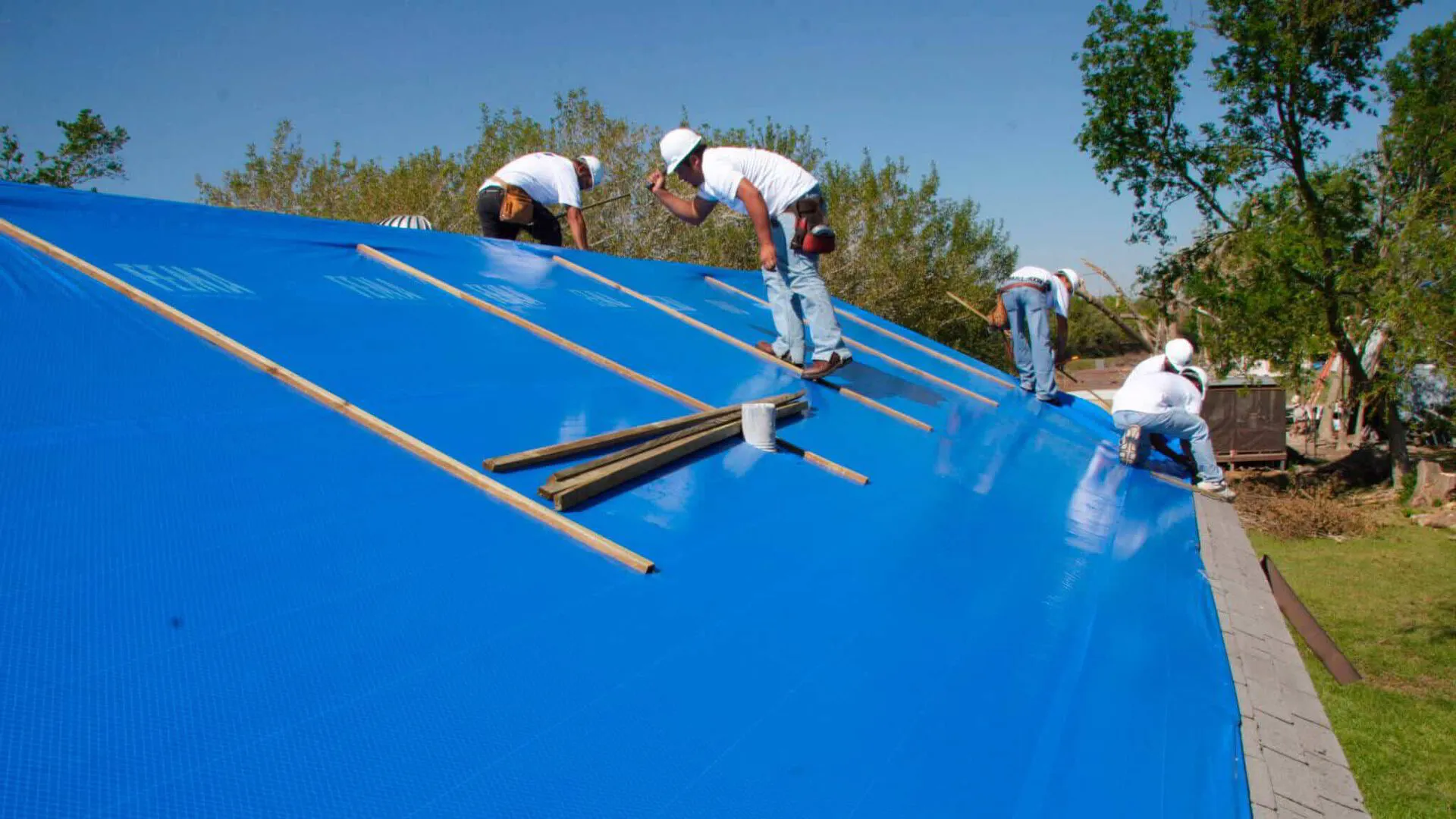
Our storm response protocol is documentation-first and dry-in-concurrent. We assess the damage as we work, not after we have finished temporary repairs. Every item we document before we touch it is defensible to an adjuster. Every repair we make before we document it is a potential dispute. Fifteen years of working Austin commercial roofs after significant weather events shaped that sequence.
Triage and Priority Setting on Austin Buildings
After a major storm event — particularly in the spring severe weather window — multiple building owners call simultaneously. We triage based on interior exposure: buildings with active water intrusion through punctured or blown-off membrane sections get emergency response priority. Buildings with suspected damage but no confirmed interior intrusion are scheduled for assessment in the 48-to-72-hour window. We communicate the schedule to every caller, not just the ones we respond to immediately.
For active interior intrusion, our first call on arrival is to locate the membrane breach, not to tour the interior damage. Interior water damage follows water from the membrane breach point, but it rarely presents directly below the breach — water travels under membrane, through insulation, and along steel deck until it finds a gap. Tracing from interior to membrane breach requires a methodical roof walk correlated to interior findings.
Priority repair items are dry-in — temporary cover secured against the next rain event — while permanent repair scope is documented. We do not close out a storm response visit without a written list of all observed damage, even if we only repaired the highest-priority items on the visit.
Multi-Mechanism Storm Damage Assessment
Wind component: Perimeter and corner zone membrane condition, termination bar and coping cap condition, rooftop equipment displacement. Documented zone by zone with directional reference to storm travel direction.
Hail component: Impact distribution across field, perimeter, and vertical surfaces. Stone-size calibration from available event data. Category assignment per impact zone — surface denting, membrane breach, seam separation. Photo documentation with reference markers at each identified impact point.
Rain intrusion component: Drain condition and drain capacity relative to observed ponding extent, any evidence of debris blockage at drain sumps, ponding extent and depth at time of assessment or from post-storm photos if available. Flash flood events can deposit significant debris on Austin commercial roofs — we clear drain sumps as part of the post-storm assessment, not as a separate service call.
Combined assessment output: A single report covering all three mechanisms, zone-keyed to a roof diagram, with a repair scope that distinguishes urgent-response items from items that can be scheduled within 30 days without risk of escalation.
Repair Closeout and Documentation Package
The repair closeout package for storm damage work includes the pre-repair assessment report, a repair log with each item's location, repair method, materials used, and verification result, and post-repair photographs of each repaired location. This package is suitable for submission to an insurance adjuster, to a manufacturer warranty representative for coverage confirmation, and for the building's capital planning file.
We do not bill for repairs not documented in the pre-repair assessment. The building owner knows what we found before we start, what we repaired, and what we deferred. If post-storm repair work uncovers additional damage not visible in the initial assessment — saturated insulation under a section that looked intact on the surface — we document the additional finding and get authorization before expanding scope.
Austin had a bad spring storm — how do I know if my commercial roof was damaged?
The absence of visible interior water intrusion does not mean the roof is undamaged. Hail punctures that admit a slow drip may not show inside for weeks. Edge lifts that reseated when the wind dropped leave the termination compromised. The only way to know is a post-event roof walk with a trained eye and documentation. We schedule post-storm assessments within 48 to 72 hours after major events.
What documentation do I need for a storm damage insurance claim in Texas?
Texas Department of Insurance guidance for commercial property claims generally requires a dated incident report, documented damage evidence (photographs with timestamps), and a repair scope with cost estimate. Our assessment report provides the damage documentation and scope. Your adjuster will advise on the specific submission format your carrier requires — we produce documentation that supports whatever format they specify.
Can you handle storm response for a multi-building Austin commercial portfolio?
Yes. We coordinate multi-site post-storm assessments for portfolio owners and property managers. If you have buildings in multiple Austin submarkets — say, downtown, Domain, and Round Rock — we sequence the site visits to cover all locations within a compressed window and deliver a unified report with consistent documentation format across all buildings.
Schedule a post-storm assessment for your Austin commercial building.
We cover all Austin submarkets and the close-in suburbs. Documentation package delivered within five business days of the site visit.
- Tornado Damage Roof Repair
- Leak Damage Roof Repair
- Water Damage Roof Repair
- Fire Damage Roof Repair
- Freeze Damage Roof Repair
- Healthcare Facility Roofing
- TPO Roofing
- Expansion Joint Repair
Leak points, drainage, seams, penetrations, edge metal, roof access, and interior risk should be clear before the next roof decision is priced.
Immediate repair, maintenance, coating, recover, and replacement choices should be measured against roof age, moisture risk, tenant disruption, and budget timing.
A site visit is useful when the owner needs a documented roof condition, active leak response, storm review, or a clearer capital plan.