
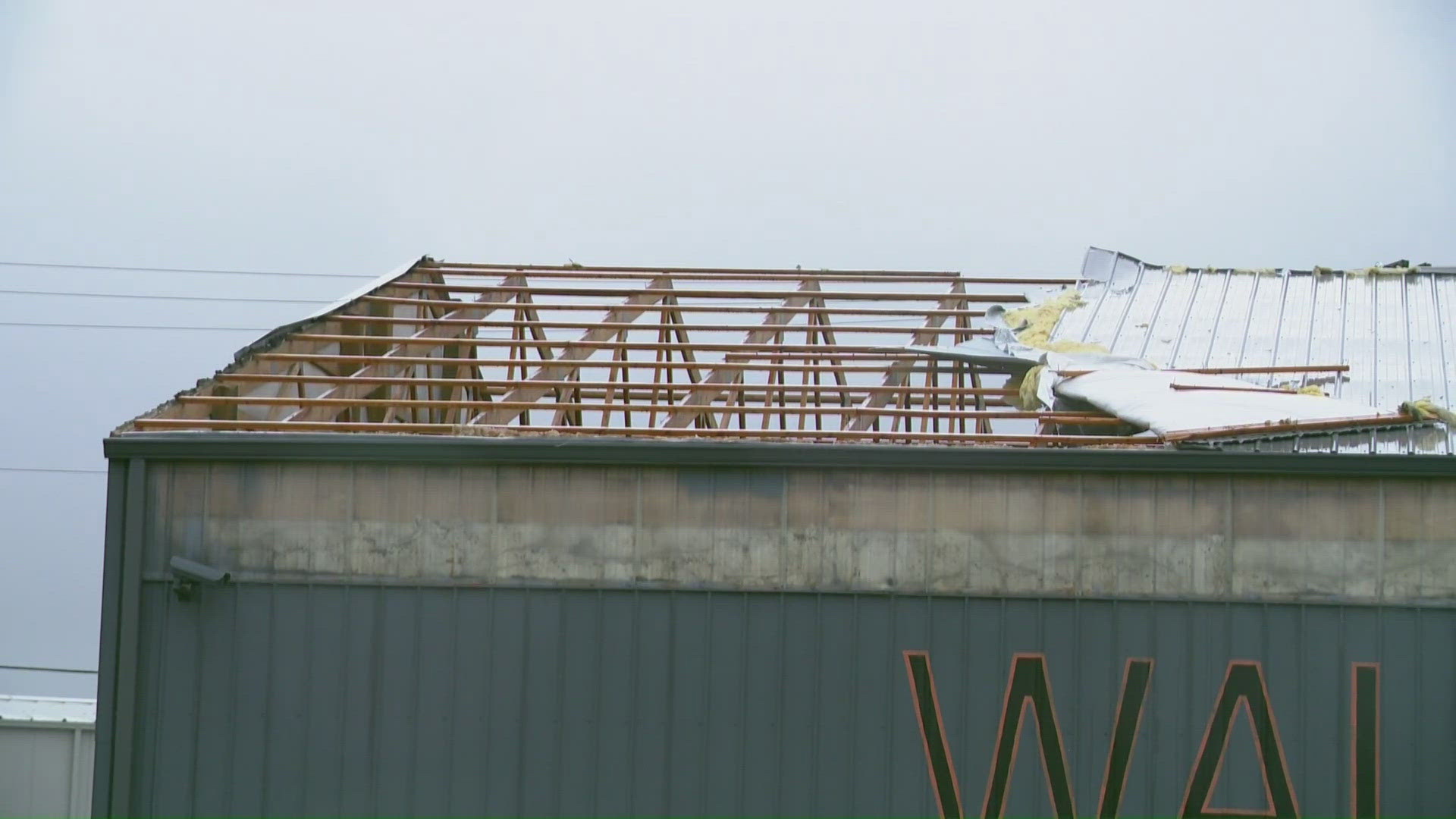
Tornado Damage Roof Repair in Austin, TX
- About
- Services
- All Services
- Built-Up Roofing Aust
- Commercial Roof Coatings Aust
- Commercial Roof Condition Reporting Aust
- Commercial Roof Inspections Aust
- Commercial Roof Leak Repair Aust
- Commercial Roof Maintenance Aust
- Commercial Roof Repair Aust
- Commercial Roof Replacement Aust
- Commercial Skylight Repair Aust
- EPDM Roofing Aust
- All Roof Systems
- Ballasted Roof Systems Aust
- Built-Up Roof (BUR) Systems Aust
- Cool Roof Systems Aust
- EPDM Roof Systems Aust
- Modified Bitumen Roof Systems Aust
- PVC Roof Systems Aust
- Silicone Roof Coating Systems Aust
- Spray Polyurethane Foam Roof Systems Aust
- Standing Seam Metal Roof Systems Aust
- TPO Roof Systems Aust
- All Industries
- EV Facility Roofing Aust
- Education Facility Roofing Aust
- Entertainment & Music Venue Roofing Aust
- Financial Services Roofing Aust
- Government Facility Roofing Aust
- Healthcare Roofing Aust
- Hospitality & Hotel Roofing Aust
- Logistics & Distribution Roofing Aust
- Semiconductor & Fab Roofing Aust
- Tech Campus Roofing Aust
- All Damage & Repair
- Fire Damage Roof Repair Aust
- Freeze Damage Roof Repair Aust
- Hail Damage Roof Repair Aust
- Insurance Claim Roof Documentation Aust
- Leak Damage Roof Repair Aust
- Storm Damage Roof Repair Aust
- Structural Roof Damage Assessment Aust
- Tornado Damage Roof Repair Aust
- Water Damage Roof Repair Aust
- Wind Damage Roof Repair Aust
- All Property Types
- Distribution Center Roofing Aust
- Manufacturing Facility Roofing Aust
- Medical Building Roofing Aust
- Multifamily Roofing Aust
- Office Building Roofing Aust
- Religious Building Roofing Aust
- Restaurant Roofing Aust
- Retail Roofing Aust
- School Roofing Aust
- Warehouse Roofing Aust
- All Capabilities
- Commercial Roof Condition Reports Aust
- Commercial Roof Inspections Aust
- Commercial Roof Moisture Surveys Aust
- Commercial Roof Zone Mapping Aust
- Competitive Bid Coordination
- Infrared Roof Scanning Aust
- Manufacturer Warranty Management
- Owner Rep Services — Commercial Roofing Aust
- Replacement vs. Recover Analysis Aust
- Roof Asset Management Aust
Emergency assessment and repair on Austin commercial buildings after tornado and severe rotational wind events — structural documentation, immediate dry-in, and verified repair scoping.
Tornadoes in Central Texas are less frequent than in the Oklahoma corridor but are not rare. Travis and Williamson counties have documented EF0 through EF2 tornado touchdowns in most decades. The distinction in commercial roofing damage between a strong-straight-line wind event and an EF0 or EF1 tornado is often visible in the damage pattern: tornado-related membrane blow-off tends to be concentrated in a narrow swath with a clear directional component, while straight-line wind damage is more uniformly distributed across the upwind-facing perimeter. Damage pattern documentation matters for both insurance and building code compliance.
The primary concern after any tornado event on a commercial building is structural integrity before roof repair. A tornado that damages a commercial roof system can also impose loads on the structural deck, the parapet walls, and the building envelope that compromise the building's safety for occupancy. We assess roof system damage as part of the initial evaluation, but we also flag any evidence of structural deck deflection, parapet wall displacement, or wall-to-roof connection failure for the structural engineer of record to evaluate. We do not proceed with roofing work on a building with suspected structural compromise until an engineer has cleared the structure.
Austin's spring severe weather season — March through June — is the high-probability window for tornado events. The supercell thunderstorms that develop along the dry line west of Austin in this period have produced documented tornado touchdowns in Williamson County and in the western Travis County hill country. The Pflugerville and Hutto areas have EF1 and EF2 historical touchdowns within the last 20 years. If your commercial building is in this corridor and lacks a post-event assessment protocol, the time to develop one is before the next event.
Emergency Assessment Protocol for Tornado-Affected Buildings
Step one is occupancy safety — before we assess the roof, we coordinate with the building owner to confirm that the structure has been cleared for occupancy by the authority having jurisdiction. In Austin, that is typically the City of Austin Development Services Department or, for cities in the metro, the relevant municipal building official. We do not proceed with roof assessment on a posted building without clearance.
Roof system assessment after a tornado event documents: the extent of membrane displacement or removal by zone, deck condition at exposed areas, parapet and coping cap condition, penetration and equipment damage, and any evidence of structural deck deflection or fastener pullout at the deck-to-structure connection. Each finding is photographed and logged before any repair work begins.
We distinguish between roof system damage — what we repair — and structural damage — what a structural engineer must assess. Parapet wall cracking or displacement, roof-to-wall connection separation, and visible deck deflection are flagged for the engineer. We document these findings and include them in the assessment report but we do not represent that our assessment substitutes for structural engineering.
Repair Scope for Tornado-Level Wind Damage
Membrane blow-off repair at tornado wind speeds typically involves more than edge replacement. When membrane is stripped from the field of a roof rather than just the perimeter, the insulation below the stripped zone is usually compromised — the fastener plates that held the insulation pulled through or the insulation boards themselves were lifted. We assess the insulation condition in any exposed zone before replacing membrane over it.
Fastener pullout from structural deck: At EF1 and above, the uplift forces can pull membrane-attached fasteners through insulation and out of the structural deck. The deck fastener holes must be evaluated for deck gauge integrity before refastening. Metal decks with significant corrosion may not hold new fasteners at design uplift load — we flag this in the scope.
Emergency dry-in on large exposed areas: For significant membrane blow-off, we use ballasted temporary cover — typically woven poly with sandbag ballast — sized to cover the exposed zone and lapped over the intact membrane perimeter. We do not use heat-welded temporary patches on exposed insulation, as the insulation surface is not a compatible weld substrate.
Insurance Documentation for Tornado Damage
Tornado events in Texas typically trigger commercial property claims under the wind and hail peril. Texas Department of Insurance regulations require carriers to acknowledge claims within 15 days and accept or deny within 15 business days of receiving all documentation. Having a complete, dated, and photo-documented damage assessment in hand when you submit the claim accelerates this timeline.
Our assessment report includes the event date, NWS storm data reference, GPS-keyed zone diagram of the damage, categorized damage inventory by zone, and a repair scope with unit quantities. We do not advise on claim strategy or coverage positions. Our documentation supports whatever approach the building owner's counsel or adjuster is taking — it is factual, not advocacy.
Is my Austin commercial building safe to enter after a tornado?
That decision is made by the authority having jurisdiction, not by us. The City of Austin Development Services Department or the relevant municipal building official posts or clears buildings after tornado events. Do not re-enter a building that has been posted as unsafe, and do not assume a building is safe to enter just because it has not been posted — contact the AHJ if there is any structural concern.
What is the difference between tornado damage and straight-line wind damage for insurance purposes?
Both are typically covered under the wind peril in a commercial property policy. The distinction may matter for claim documentation — some carriers require NWS confirmation of a tornado track for tornado-specific coverage language to apply. We include available NWS or Storm Data event records in our assessment report to support the claim characterization.
How long does emergency dry-in take after tornado damage on a commercial building?
For a single-story commercial building with up to 10,000 square feet of exposed membrane, a temporary dry-in can typically be completed within four to six hours of mobilization with a full crew. Larger exposures require sequenced coverage — we work from the perimeter in, covering the highest-priority zones first. We do not leave the building exposed overnight regardless of completion status.
Get an emergency assessment for tornado damage on your Austin commercial building.
We document the full damage picture — roof system and structural observations — and produce a report that supports both the repair scope and the insurance submission.
- Leak Damage Roof Repair
- Water Damage Roof Repair
- Fire Damage Roof Repair
- Freeze Damage Roof Repair
- Structural Roof Damage Assessment
- Restaurant Roofing
- Commercial Roof Repair
- Standing Seam Metal Roofing
Leak points, drainage, seams, penetrations, edge metal, roof access, and interior risk should be clear before the next roof decision is priced.
Immediate repair, maintenance, coating, recover, and replacement choices should be measured against roof age, moisture risk, tenant disruption, and budget timing.
A site visit is useful when the owner needs a documented roof condition, active leak response, storm review, or a clearer capital plan.