
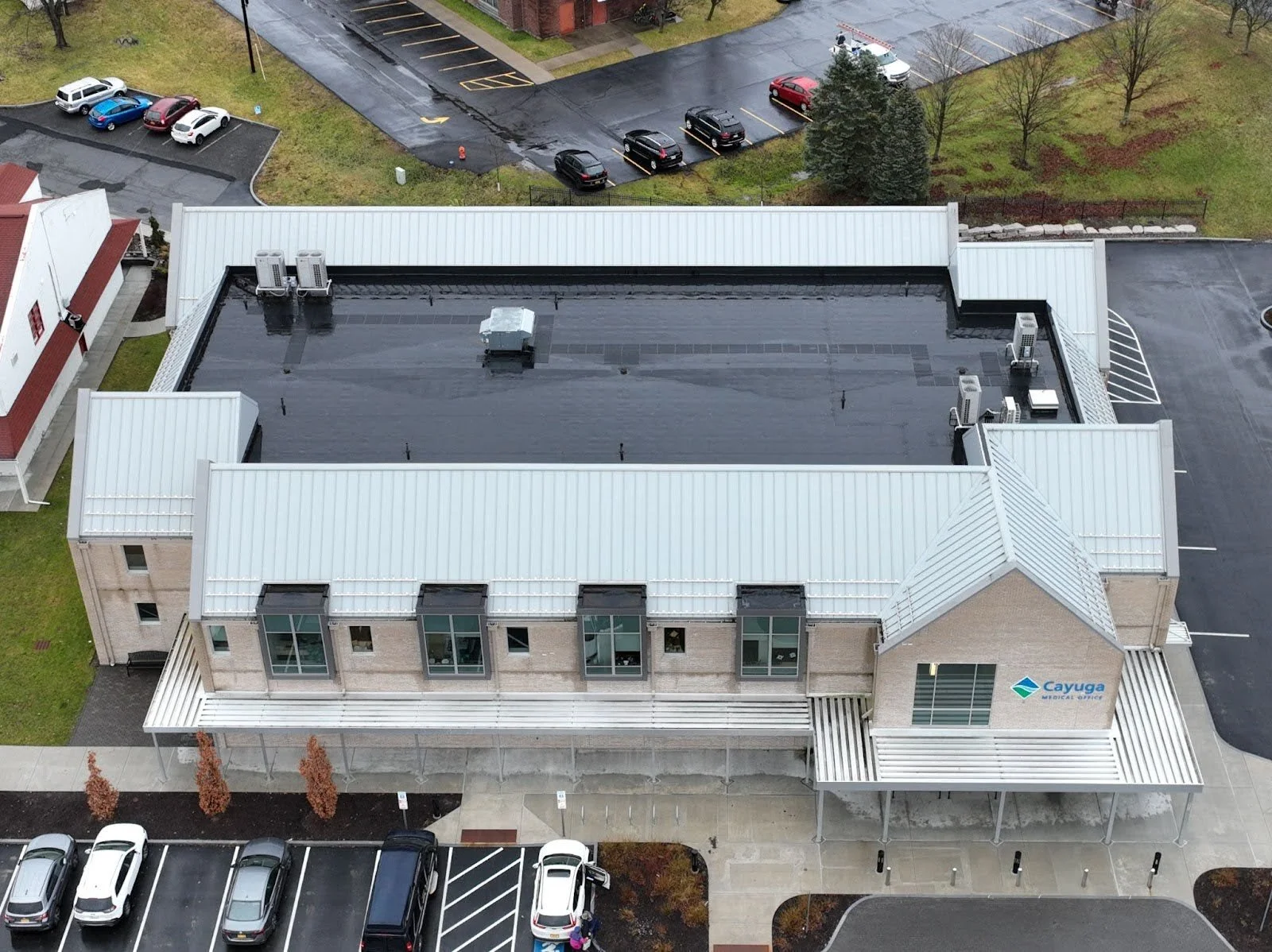
Medical Building Roofing in Austin, TX
- About
- Services
- All Services
- Built-Up Roofing Aust
- Commercial Roof Coatings Aust
- Commercial Roof Condition Reporting Aust
- Commercial Roof Inspections Aust
- Commercial Roof Leak Repair Aust
- Commercial Roof Maintenance Aust
- Commercial Roof Repair Aust
- Commercial Roof Replacement Aust
- Commercial Skylight Repair Aust
- EPDM Roofing Aust
- All Roof Systems
- Ballasted Roof Systems Aust
- Built-Up Roof (BUR) Systems Aust
- Cool Roof Systems Aust
- EPDM Roof Systems Aust
- Modified Bitumen Roof Systems Aust
- PVC Roof Systems Aust
- Silicone Roof Coating Systems Aust
- Spray Polyurethane Foam Roof Systems Aust
- Standing Seam Metal Roof Systems Aust
- TPO Roof Systems Aust
- All Industries
- EV Facility Roofing Aust
- Education Facility Roofing Aust
- Entertainment & Music Venue Roofing Aust
- Financial Services Roofing Aust
- Government Facility Roofing Aust
- Healthcare Roofing Aust
- Hospitality & Hotel Roofing Aust
- Logistics & Distribution Roofing Aust
- Semiconductor & Fab Roofing Aust
- Tech Campus Roofing Aust
- All Damage & Repair
- Fire Damage Roof Repair Aust
- Freeze Damage Roof Repair Aust
- Hail Damage Roof Repair Aust
- Insurance Claim Roof Documentation Aust
- Leak Damage Roof Repair Aust
- Storm Damage Roof Repair Aust
- Structural Roof Damage Assessment Aust
- Tornado Damage Roof Repair Aust
- Water Damage Roof Repair Aust
- Wind Damage Roof Repair Aust
- All Property Types
- Distribution Center Roofing Aust
- Manufacturing Facility Roofing Aust
- Medical Building Roofing Aust
- Multifamily Roofing Aust
- Office Building Roofing Aust
- Religious Building Roofing Aust
- Restaurant Roofing Aust
- Retail Roofing Aust
- School Roofing Aust
- Warehouse Roofing Aust
- All Capabilities
- Commercial Roof Condition Reports Aust
- Commercial Roof Inspections Aust
- Commercial Roof Moisture Surveys Aust
- Commercial Roof Zone Mapping Aust
- Competitive Bid Coordination
- Infrared Roof Scanning Aust
- Manufacturer Warranty Management
- Owner Rep Services — Commercial Roofing Aust
- Replacement vs. Recover Analysis Aust
- Roof Asset Management Aust
Austin's medical campus inventory — Dell Medical School at UT Austin, the Seton/Dell Children's cluster on 38th Street, and the St. David's system across the metro — has strict infection control requirements and zero tolerance for water intrusion above sterile and patient care areas.
Austin's healthcare real estate expanded significantly when UT Austin opened Dell Medical School in 2016, creating a medical district in the eastern edge of the campus between Red River and IH-35. Dell Seton Medical Center at The University of Texas anchors this district, joined by outpatient medical office buildings (MOBs) and research facilities that have added to the roof inventory annually. The St. David's HealthCare system operates multiple hospitals and MOBs across the metro — St. David's Medical Center on 32nd Street, St. David's North Austin Medical Center on Burnet Road, and the newer South Austin campus on William Cannon Drive.
Medical building roofing has requirements that standard commercial work does not. Infection control above occupied patient care areas is the primary constraint: roof work that generates debris, dust, or vibration above sterile processing rooms, operating suites, or NICU areas requires an Infection Control Risk Assessment (ICRA) plan coordinated with the facility's infection control team. This is a regulatory and accreditation requirement — not a preference — for buildings operating under Joint Commission standards.
Water intrusion above patient care areas is a zero-tolerance event. A leak above a sterile processing department or pharmacy causes an immediate shutdown of that area until remediation is complete. We approach medical building scopes with this consequence in mind: documentation of every roof penetration and drain, same-day dry-in on any opened section, and no exposed deck overnight regardless of forecast.
Dell Medical School Campus and UT Austin Medical District
The Dell Medical School campus between Red River and IH-35 includes buildings constructed between 2016 and 2022 — relatively young roof systems by commercial standards, but the outpatient MOBs and research facilities adjacent to the main hospital are already entering their first major inspection window. The buildings in this district are predominantly flat-roof construction with TPO or EPDM membranes on steel deck, similar to other mid-rise institutional construction in Austin.
Research laboratory buildings in the medical district have rooftop mechanical loads that exceed standard office building density. Exhaust fans for fume hoods, air handlers for pressurized laboratory suites, and condenser equipment create a high-penetration-density environment at the roof level. Every penetration is a potential leak point — curb flashings, duct penetrations, and exhaust stack supports all require inspection and re-flashing on a predictable maintenance cycle.
Coordination with UT Austin's Facilities Services is required for any work on buildings within the UT campus boundary. We are familiar with UT's project coordination requirements and include the applicable pre-construction coordination steps — building access approval, contractor orientation, waste management compliance — in our project setup checklist.
Seton/Dell Children's and 38th Street Medical Corridor
Dell Children's Medical Center of Texas on 38th Street is one of the largest pediatric hospitals in the region. The campus includes the main hospital building and ancillary MOBs that have been developed and expanded at various points since the hospital's 2007 opening. Buildings at different ages have different roof system generations — some with original membrane, some with recovers or partial replacements.
Pediatric hospital roofing carries the same ICRA coordination requirement as adult acute care — the NICU and pediatric surgical suites are as sensitive to construction-related contamination as any adult operating room. Before mobilizing on any Dell Children's-adjacent building, our project manager confirms the ICRA classification, establishes the dust and debris containment protocol with the infection control team, and documents the containment plan in the project file.
St. David's System and Outpatient MOB Roofing
The St. David's HealthCare system operates campuses on 32nd Street in central Austin, on Burnet Road in the north, and on William Cannon Drive in South Austin. Each campus has a mix of main hospital building and adjacent medical office buildings. The MOBs — typically 3-to-6-story flat-roof construction — have roof systems in various condition states depending on the construction vintage of each building.
Outpatient MOBs present a different operational constraint than inpatient hospital buildings: they often have no backup system for HVAC if a rooftop unit is taken offline, which means scheduling HVAC-adjacent roof work requires advance coordination with the building's facilities management to avoid patient appointment cancellations. We include this coordination requirement in the pre-construction planning phase, not as a day-of discovery.
What is an ICRA plan and do you provide one?
An Infection Control Risk Assessment (ICRA) plan documents how construction activities above or adjacent to patient care areas will be controlled to prevent contamination — dust barriers, negative air pressure, debris containment, and crew traffic routing that avoids clinical areas. We develop the ICRA in coordination with the facility's infection control officer as a pre-construction deliverable. The plan is documented, signed off by the facility, and referenced throughout the project.
Can medical building roof work happen while the facility is open?
In most cases, yes — with appropriate ICRA planning and phasing. Tear-off above occupied patient care areas is typically scheduled during low-census windows or after hours on the affected section. Membrane installation and flashing work above occupied areas can proceed during business hours with containment in place. We do not leave any section with exposed deck during patient occupancy hours.
How do you handle rooftop mechanical coordination on a hospital building?
Hospital HVAC systems typically have no single point of failure — units are zoned and redundant. Before moving or flashing any curb, we confirm with the facility's mechanical engineering team which units serve which zones and whether temporary shutdown of a unit requires advance scheduling with clinical operations. This coordination is documented in the project file before any mechanical-adjacent work begins.
Schedule a medical building roof assessment in Austin.
We cover the Dell Medical district, St. David's system campuses, and outpatient MOBs across the Austin metro. Written condition reports include ICRA coordination requirements for any acute-care-adjacent buildings.
- Multifamily Roofing
- Data Center Roofing
- Mixed Use Development Roofing
- Airport Terminal Roofing
- Fire Station Roofing
- Capital Planning Support
- University Campus Roofing
- PVC Roofing
Leak points, drainage, seams, penetrations, edge metal, roof access, and interior risk should be clear before the next roof decision is priced.
Immediate repair, maintenance, coating, recover, and replacement choices should be measured against roof age, moisture risk, tenant disruption, and budget timing.
A site visit is useful when the owner needs a documented roof condition, active leak response, storm review, or a clearer capital plan.