
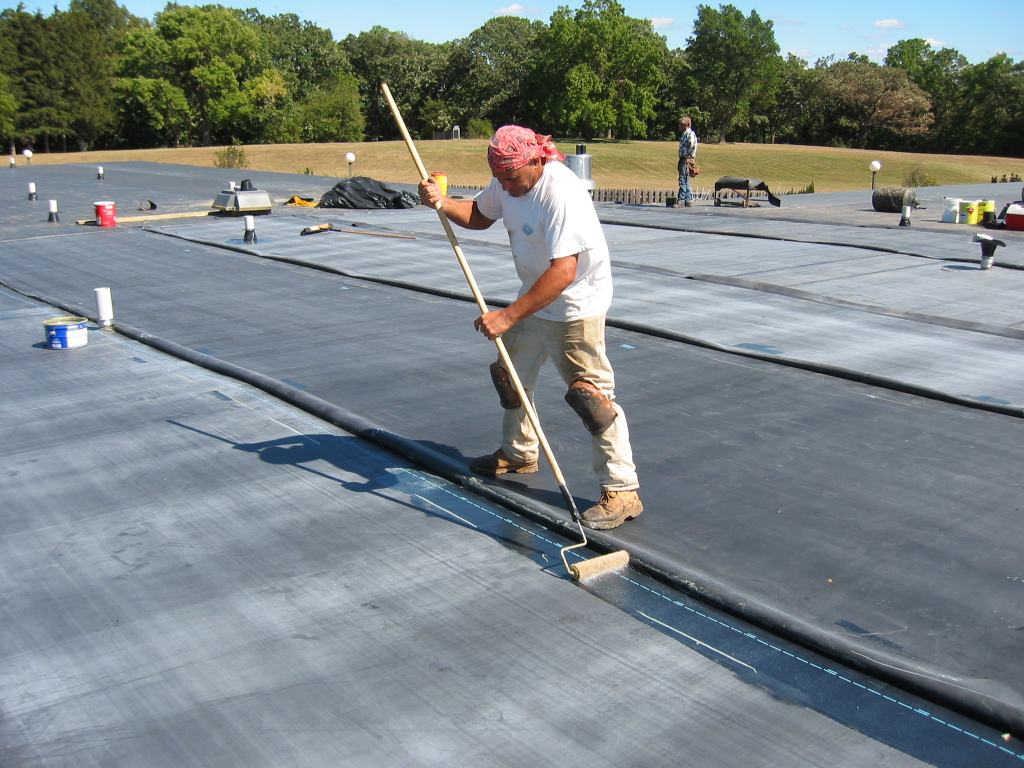
EPDM Roof Systems in Austin, TX
- About
- Services
- All Services
- Built-Up Roofing Aust
- Commercial Roof Coatings Aust
- Commercial Roof Condition Reporting Aust
- Commercial Roof Inspections Aust
- Commercial Roof Leak Repair Aust
- Commercial Roof Maintenance Aust
- Commercial Roof Repair Aust
- Commercial Roof Replacement Aust
- Commercial Skylight Repair Aust
- EPDM Roofing Aust
- All Roof Systems
- Ballasted Roof Systems Aust
- Built-Up Roof (BUR) Systems Aust
- Cool Roof Systems Aust
- EPDM Roof Systems Aust
- Modified Bitumen Roof Systems Aust
- PVC Roof Systems Aust
- Silicone Roof Coating Systems Aust
- Spray Polyurethane Foam Roof Systems Aust
- Standing Seam Metal Roof Systems Aust
- TPO Roof Systems Aust
- All Industries
- EV Facility Roofing Aust
- Education Facility Roofing Aust
- Entertainment & Music Venue Roofing Aust
- Financial Services Roofing Aust
- Government Facility Roofing Aust
- Healthcare Roofing Aust
- Hospitality & Hotel Roofing Aust
- Logistics & Distribution Roofing Aust
- Semiconductor & Fab Roofing Aust
- Tech Campus Roofing Aust
- All Damage & Repair
- Fire Damage Roof Repair Aust
- Freeze Damage Roof Repair Aust
- Hail Damage Roof Repair Aust
- Insurance Claim Roof Documentation Aust
- Leak Damage Roof Repair Aust
- Storm Damage Roof Repair Aust
- Structural Roof Damage Assessment Aust
- Tornado Damage Roof Repair Aust
- Water Damage Roof Repair Aust
- Wind Damage Roof Repair Aust
- All Property Types
- Distribution Center Roofing Aust
- Manufacturing Facility Roofing Aust
- Medical Building Roofing Aust
- Multifamily Roofing Aust
- Office Building Roofing Aust
- Religious Building Roofing Aust
- Restaurant Roofing Aust
- Retail Roofing Aust
- School Roofing Aust
- Warehouse Roofing Aust
- All Capabilities
- Commercial Roof Condition Reports Aust
- Commercial Roof Inspections Aust
- Commercial Roof Moisture Surveys Aust
- Commercial Roof Zone Mapping Aust
- Competitive Bid Coordination
- Infrared Roof Scanning Aust
- Manufacturer Warranty Management
- Owner Rep Services — Commercial Roofing Aust
- Replacement vs. Recover Analysis Aust
- Roof Asset Management Aust
EPDM has a deep legacy install base on Austin's industrial and warehouse buildings — particularly in Del Valle, East Austin, and the older SH 130 corridor. We assess existing 60-mil systems, scope replacement when the membrane has reached end of life, and install new EPDM where the application warrants it.
Ethylene propylene diene monomer — EPDM — was the dominant commercial flat roofing membrane in Austin from the late 1980s through the mid-2000s, before TPO's reflectivity advantage shifted most new installation to white membranes. That means Austin's industrial and warehouse inventory east of I-35 — the Del Valle distribution clusters, the older Airport Boulevard corridor buildings, the East Austin light-manufacturing blocks between Manor Road and 51st Street — carries a substantial EPDM install base that is now 15 to 30 years old.
EPDM at 60-mil is a durable membrane. Properly installed with fully adhered or mechanically fastened attachment and standard EPDM lap sealant at seams, a 60-mil black EPDM system can perform 20 to 25 years without major failure. The failure modes we see most often on aging Austin EPDM are lap seam separation from sealant degradation, shrinkage-induced flashing pull-away at parapet terminations, and punctures at rooftop equipment pads where years of mechanical access traffic have worn through the membrane. None of these are indictments of the system — they are expected age-related conditions that require assessment and targeted repair or full replacement depending on the scope of the damage.
The Tesla Gigafactory Texas in Del Valle opened in 2022 on a site that includes older industrial buildings with legacy commercial roofing alongside new construction. The broader Del Valle industrial corridor continues to expand with distribution and manufacturing tenants drawn by I-35 and SH 130 access. We know this submarket, we have walked roofs in it, and we understand the difference between a 1990s EPDM system worth recovering and one that has reached the end of its useful life.
Assessing Legacy EPDM on Austin Industrial Buildings
An EPDM roof assessment begins at the seams. Lap seam separation is the primary failure mode on aging EPDM — EPDM lap sealant degrades over time, and the seam opens as the sealant loses adhesion. We probe every accessible seam on a condition assessment, document separation location and length, and photograph each defect with a zone reference so the building owner can visualize the pattern. If seam separation is localized to specific zones, targeted re-sealing may extend the system another five years. If separation is distributed across the field, replacement is the honest scope.
Flashing pullaway at parapets is the second inspection focus. EPDM shrinks measurably over its service life — a 30-year-old EPDM membrane may have shrunk enough to pull flashings away from parapet walls at interior corners and nailers. Pulled flashings are an active leak path, not a future risk. We document every pulled flashing location with photo and measurement, and we distinguish flashing that has pulled but not yet breached from flashing that is actively admitting water.
Moisture core sampling gives us the insulation condition beneath the membrane. On a 25-year-old EPDM system in East Austin or Del Valle, we expect to find some wet insulation at historic leak locations. If saturation covers more than 25 percent of the sampled area, replacement of the full system is the right call — recovering over that much wet insulation traps moisture and accelerates deck deterioration regardless of what goes on top.
New EPDM Installation for Austin Industrial Applications
EPDM still makes sense as a new-installation specification in Austin industrial applications where reflectivity is not a material concern — manufacturing buildings with high internal heat loads where the cooling-load reduction from a white membrane is offset by the process equipment inside, or facilities where operational aesthetics favor a dark membrane. For these applications, 60-mil fully adhered EPDM with EPDM-compatible flashing and seam tape is a proven system with a straightforward installation and a 20-year warranty path from most major manufacturers.
Mechanically fastened EPDM — where the membrane is attached to the deck with fasteners and plates at the field rather than bonded adhesive — is less common in Austin commercial work but appropriate on some older decks where adhesion test results are inconsistent. The tradeoff is that the fastener pattern is visible as a quilted pattern in the membrane surface after several thermal cycles; for industrial applications where aesthetics are not a priority, this is not a concern.
On Austin industrial buildings along the SH 130 corridor in Del Valle and east toward the Bastrop County line, wind-uplift design is an important specification input. Exposure category and building height determine the fastener density and attachment method; we design each system against the building-specific uplift calculation, not against a generic Austin-average.
EPDM Recover vs. Full Replacement in East Austin and Del Valle
The recover-versus-replace decision on legacy EPDM comes down to two data points: insulation moisture content from core sampling, and deck condition from pull-up inspection at wet zones. If insulation is predominantly dry and the deck is structurally sound, recovering over the existing EPDM with new TPO or a second EPDM layer is a legitimate scope that avoids tear-off cost and landfill disposal.
For large Del Valle industrial buildings — 100,000 to 300,000 sq ft roofs are not unusual in the distribution cluster east of the airport — avoided tear-off and disposal cost is a meaningful budget factor. We core-sample at a density sufficient to characterize insulation condition across the full footprint, not just at obvious leak areas, before making the recover recommendation.
If the deck shows corrosion, deflection, or fastener pullout values below minimum spec at wet-zone locations, we flag those areas for deck repair or panel replacement before any recover proceeds. A recover over a compromised deck produces a new warranty on an unsound substrate — the new system will fail at the deck problem regardless of membrane quality.
How does Austin's UV environment affect black EPDM membranes?
Black EPDM absorbs rather than reflects UV radiation, which accelerates surface oxidation over time. The membrane develops a chalky surface layer — this is normal weathering and does not indicate structural failure. The UV concern for black EPDM is surface temperature: on a peak August Austin afternoon, a black EPDM membrane can reach 175°F, which adds cooling load to every floor below. For buildings where cooling cost is a significant operating expense, the reflectivity difference between black EPDM and white TPO is worth quantifying before specifying a new system.
Can existing EPDM seams be re-sealed without full replacement?
Yes, if the separation is localized and the membrane body is in good condition. We use EPDM-compatible lap sealant and cover tape to re-seal separated laps. The repair life depends on how much of the original sealant bond remains and the condition of the membrane edge at the lap. On 30-year-old EPDM where the original sealant has fully degraded, a full re-sealing of the lap perimeter is possible but is typically a 5-year extension rather than a long-term solution. A written condition assessment gives you the data to decide whether repair or replacement produces better long-term economics.
Does the City of Austin permit EPDM re-roofing the same as TPO?
The City of Austin Development Services Department processes flat-roof replacement permits by project scope, not membrane type — the permit requirement is the same for EPDM and TPO replacements above the threshold project size. We pull the permit as part of project setup. Del Valle falls outside Austin city limits and under Travis County's jurisdiction for permitting; the process differs slightly but we handle both.
Get an EPDM assessment or replacement scope for your Austin industrial building.
We know the Del Valle and East Austin EPDM install base. We will walk your roof, pull cores, and give you an honest assessment of whether repair, recover, or full replacement produces the better long-term outcome.
- Modified Bitumen Systems
- Built Up Roof Systems
- Standing Seam Metal Systems
- Silicone Roof Coating Systems
- Spray Polyurethane Foam Systems
- Hail Damage Roof Repair Service
- Church Roofing
- Roof Recover Overlay
Leak points, drainage, seams, penetrations, edge metal, roof access, and interior risk should be clear before the next roof decision is priced.
Immediate repair, maintenance, coating, recover, and replacement choices should be measured against roof age, moisture risk, tenant disruption, and budget timing.
A site visit is useful when the owner needs a documented roof condition, active leak response, storm review, or a clearer capital plan.