
Logistics & Distribution Roofing in Austin, TX
- About
- Services
- All Services
- Built-Up Roofing Aust
- Commercial Roof Coatings Aust
- Commercial Roof Condition Reporting Aust
- Commercial Roof Inspections Aust
- Commercial Roof Leak Repair Aust
- Commercial Roof Maintenance Aust
- Commercial Roof Repair Aust
- Commercial Roof Replacement Aust
- Commercial Skylight Repair Aust
- EPDM Roofing Aust
- All Roof Systems
- Ballasted Roof Systems Aust
- Built-Up Roof (BUR) Systems Aust
- Cool Roof Systems Aust
- EPDM Roof Systems Aust
- Modified Bitumen Roof Systems Aust
- PVC Roof Systems Aust
- Silicone Roof Coating Systems Aust
- Spray Polyurethane Foam Roof Systems Aust
- Standing Seam Metal Roof Systems Aust
- TPO Roof Systems Aust
- All Industries
- EV Facility Roofing Aust
- Education Facility Roofing Aust
- Entertainment & Music Venue Roofing Aust
- Financial Services Roofing Aust
- Government Facility Roofing Aust
- Healthcare Roofing Aust
- Hospitality & Hotel Roofing Aust
- Logistics & Distribution Roofing Aust
- Semiconductor & Fab Roofing Aust
- Tech Campus Roofing Aust
- All Damage & Repair
- Fire Damage Roof Repair Aust
- Freeze Damage Roof Repair Aust
- Hail Damage Roof Repair Aust
- Insurance Claim Roof Documentation Aust
- Leak Damage Roof Repair Aust
- Storm Damage Roof Repair Aust
- Structural Roof Damage Assessment Aust
- Tornado Damage Roof Repair Aust
- Water Damage Roof Repair Aust
- Wind Damage Roof Repair Aust
- All Property Types
- Distribution Center Roofing Aust
- Manufacturing Facility Roofing Aust
- Medical Building Roofing Aust
- Multifamily Roofing Aust
- Office Building Roofing Aust
- Religious Building Roofing Aust
- Restaurant Roofing Aust
- Retail Roofing Aust
- School Roofing Aust
- Warehouse Roofing Aust
- All Capabilities
- Commercial Roof Condition Reports Aust
- Commercial Roof Inspections Aust
- Commercial Roof Moisture Surveys Aust
- Commercial Roof Zone Mapping Aust
- Competitive Bid Coordination
- Infrared Roof Scanning Aust
- Manufacturer Warranty Management
- Owner Rep Services — Commercial Roofing Aust
- Replacement vs. Recover Analysis Aust
- Roof Asset Management Aust
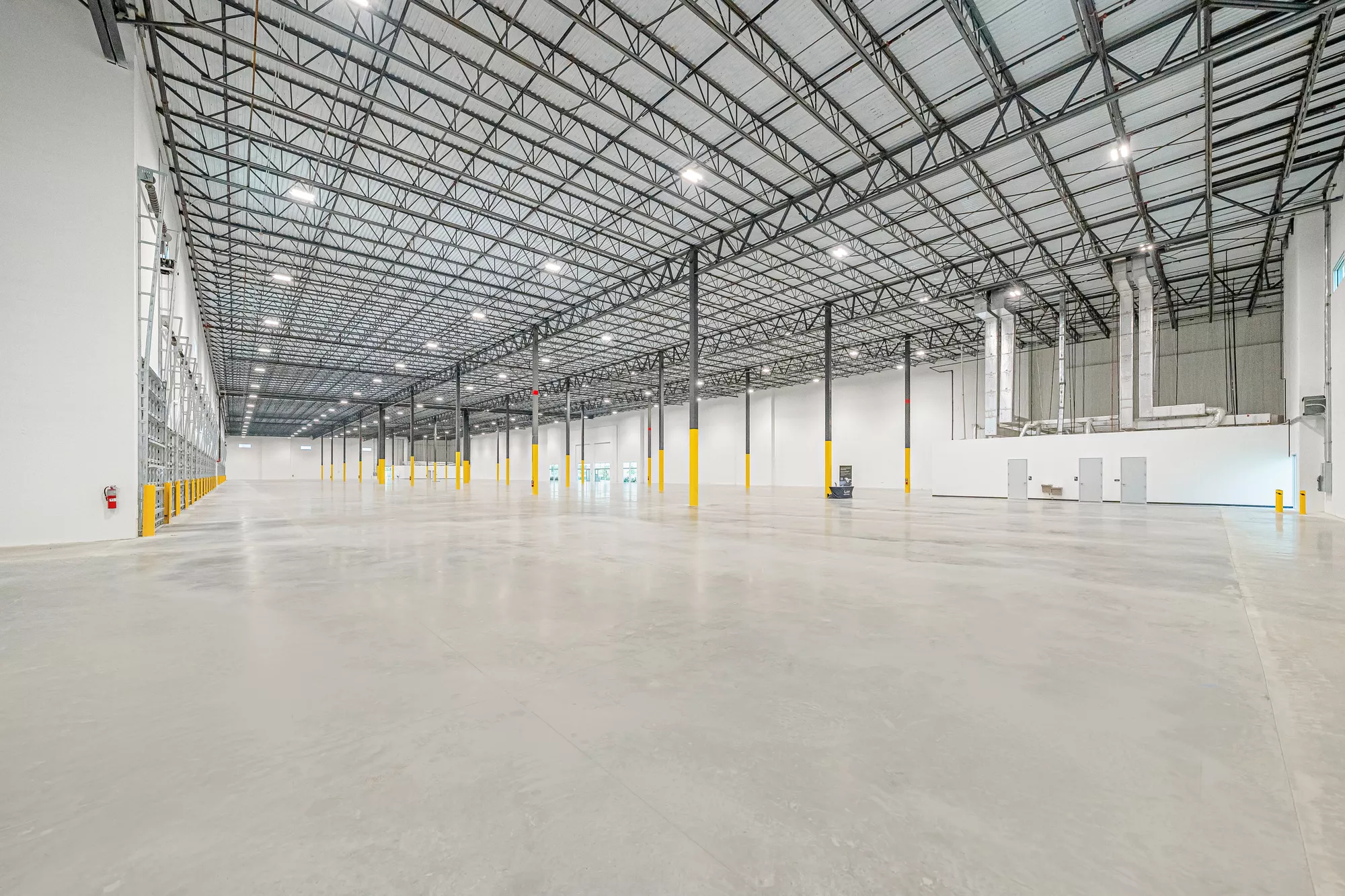
Austin's logistics corridor — Del Valle, SH 130, and the ABIA freight cluster — has one of the fastest-growing distribution facility inventories in the South Central region. We deliver large-format industrial flat roofing that works around 24/7 operations, not against them.
Amazon operates multiple fulfillment and delivery stations in the Austin MSA — ATX5 and ATX9 are among the documented sort and fulfillment facilities in the market, with the distribution cluster concentrated in the Del Valle area east of the airport. These are 24/7 operations; a facility that processes packages around the clock has no tolerance for overhead moisture intrusion, and no scheduled window where the building can be partially exposed for a roofing crew.
FedEx's Austin hub adjacent to Austin-Bergstrom International Airport is one of the regional air cargo sort facilities for Central Texas. Airport-adjacent logistics buildings have additional operational constraints: aircraft noise levels affect crew communication protocols, and proximity to the airfield creates crane height restrictions during roofing work. We identify these constraints in the pre-scope phase, not after mobilization.
The SH 130 corridor from Del Valle north through Pflugerville and Georgetown is the primary logistics development corridor in the Austin MSA. Distribution centers for national retailers, regional cold chain operators, and third-party logistics providers have been developing in this corridor steadily since the mid-2010s. The oldest buildings in this wave are now approaching their first major roofing maintenance decision — the 10 to 15 year mark where NDL warranty renewal or membrane recover becomes relevant.
Amazon Fulfillment and Delivery Station Roofing
Amazon's fulfillment and delivery stations in the Austin area operate on the continuous throughput model — product moves through these buildings around the clock, and the production flow cannot be interrupted by overhead work. Phased roofing production on Amazon facilities coordinates work zones against the facility's internal operational layout: conveyor systems, sort areas, and packing stations all have specific overhead clearances, and staging equipment above active conveyor zones requires the facility's safety team's clearance.
Amazon's facilities management and real estate teams have specific scope documentation requirements for roofing work — warranty documentation, inspection reports, and condition assessments formatted for their asset management systems. We provide closeout documentation in the format that facility owners require, not in a format convenient for the contractor.
Del Valle properties require Travis County permit coordination for unincorporated parcels. Amazon facility construction is coordinated through their own project management infrastructure; we interface with that team on permit applications, site access, and production sequencing.
FedEx ABIA Hub and Airport-Adjacent Logistics Roofing
Airport-adjacent facilities present specific constraints for roofing work. Crane operations near ABIA require coordination with Austin-Bergstrom International Airport's operations team — crane height limits are enforced within the airport's designated airspace, and crane positioning must be cleared against ABIA's obstacle limitation surfaces. We identify crane height constraints in the pre-scope walk and design the material handling plan to work within those limits.
Airport noise environments make crew communication protocols more important than on standard commercial sites. We require crew supervisors to use radio communication during loud production operations rather than relying on shouted instruction — this matters for safety and for production quality. Penetration flashings installed without clear communication between the membrane installer and the crew supervisor are a documented deficiency source.
FedEx facilities have their own facility management and construction coordination protocols. Roofing work is coordinated through their regional facilities team. We interface with that team on production scheduling and site access, not directly with the building owner's general management.
SH 130 Corridor Distribution and Cold Chain Roofing
The SH 130 corridor's distribution facilities range from standard ambient-temperature warehouses to cold chain operations that maintain sub-freezing or refrigerated interior temperatures. Cold chain buildings have specific roofing requirements: the vapor retarder placement, insulation specification, and membrane selection must account for the condensation and vapor drive conditions that a refrigerated interior creates against an Austin summer exterior. A standard TPO spec applied to a refrigerated warehouse will produce condensation and insulation saturation within years — the correct spec requires a vapor retarder below the insulation and an insulation stack calculated against the specific interior-exterior temperature differential.
Tilt-wall construction is dominant in the SH 130 corridor. Parapet cap detailing at the tilt-wall-to-roof interface is the most common leak point on these buildings — thermal cycling in Central Texas drives movement at the metal cap that degrades caulked joints on a predictable schedule. We document parapet cap condition in every pre-scope walk and include reparapeting in any scope where the cap condition warrants it.
SH corridor development falls under Williamson County, Hays County, or Travis County jurisdiction depending on the specific parcel location. We identify the applicable permitting authority in pre-construction and manage permit applications accordingly — the building owner does not need to determine their own permitting jurisdiction.
How do you sequence roofing work on a 24/7 distribution facility without disrupting operations?
Phased production — sections sized to what can be torn off and dried in within a single work shift — is the standard approach. Each section gets a temporary dry-in at end of shift; no interior space is exposed overnight. Work zones are coordinated against the facility's operational layout to avoid active conveyor and sort areas overhead. Pre-construction coordination with the facility's operations and safety teams defines the sequencing plan before mobilization.
What are the roofing requirements for a cold-chain distribution building in the Austin area?
Cold chain buildings require a vapor retarder below the insulation, placed on the warm side of the assembly. The insulation stack must be calculated against the specific interior-exterior temperature differential — a refrigerated warehouse running 35°F interior in an Austin summer with 100°F exterior has a higher vapor drive than an ambient facility, and the insulation specification needs to account for that. Standard commercial flat-roof specs without vapor retarder accommodation are incorrect for cold chain applications.
Can you handle crane operations near Austin-Bergstrom International Airport?
Yes. We coordinate crane positioning against ABIA's obstacle limitation surfaces — crane heights near the airport are restricted within designated zones, and we design the material handling plan to work within those limits. This is identified in the pre-scope walk, not discovered after equipment is mobilized.
Get a logistics facility roofing scope in the Austin market.
We cover Amazon's Austin-area facilities, the FedEx ABIA hub, and the full SH 130 distribution corridor. Our project managers will walk the roof and deliver a written scope that works around your operational requirements.
- REIT Roofing
- Aerospace Defense Roofing
- Healthcare Roofing
- Ev Electric Vehicle Roofing
- Hospitality Roofing
- Drone Roof Inspection
- Roof Leak Repair
- School Roofing
Leak points, drainage, seams, penetrations, edge metal, roof access, and interior risk should be clear before the next roof decision is priced.
Immediate repair, maintenance, coating, recover, and replacement choices should be measured against roof age, moisture risk, tenant disruption, and budget timing.
A site visit is useful when the owner needs a documented roof condition, active leak response, storm review, or a clearer capital plan.