
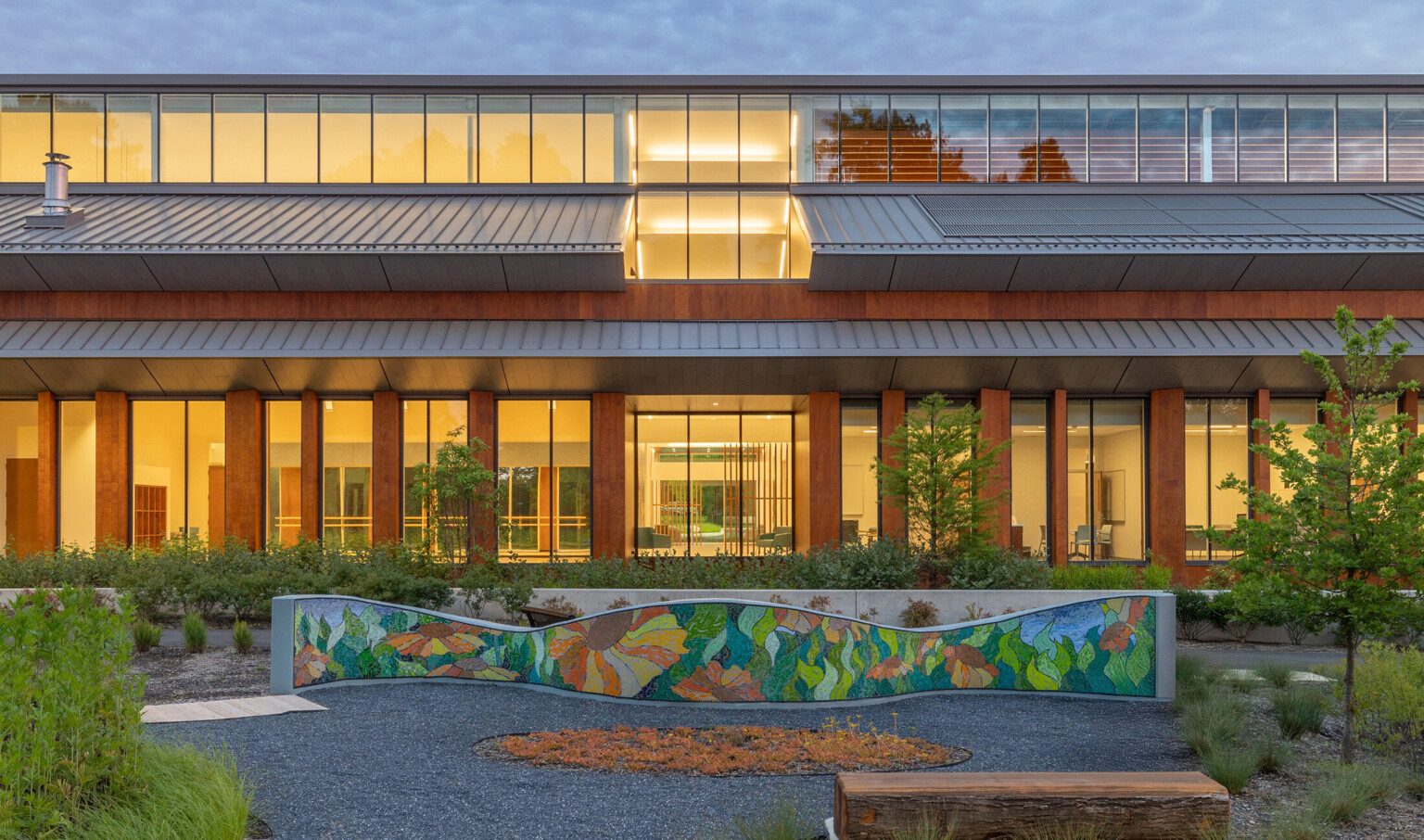
Sports & Recreation Facility Roofing in Austin, TX
Roofing for Austin's Sports and Recreation Facilities
A recreation building puts a roof to a test that most commercial structures never face. The deck spans a hundred feet or more with no interior columns, the space underneath is packed with people and the heat they throw off, and if there is a pool involved the air below is warm and saturated all day long. Roofing one of these buildings well means thinking about how the structure moves, how the humidity behaves, and how a leak over a hardwood court or an ice sheet turns into a closure nobody can afford.
We build and service low-slope and metal roofs for field houses, indoor courts and volleyball facilities, gymnastics and cheer gyms, ice rinks, climbing centers, and municipal and private natatoriums across the Austin area. Recreation has boomed alongside the region's population, from the youth-sports complexes filling the suburbs in Round Rock, Cedar Park, and Pflugerville to the private athletic clubs near the Domain and the aquatic centers run by the City of Austin and the surrounding school districts.
Long Clear Spans Move, and the Roof Has to Move With Them
The whole point of a gym or field house is an open interior with no columns in the way, which means the roof rides on long-span steel joists or beams. Those long spans flex under wind and deflect as temperatures swing across a Central Texas day, and a roof system that is not detailed for that movement will tear at its seams and flashings over time. We use membrane and fastening systems that accommodate deck movement, detail expansion joints properly instead of bridging over them, and pay special attention to the perimeter, where uplift forces on a big open roof are highest. On metal-deck buildings we account for thermal cycling so panel movement does not work fasteners loose season after season.
Wind uplift is the quiet design driver on these buildings. A wide, tall, open structure catches wind like a sail, and Austin's spring storm season brings the gusts to prove it. We design the attachment and edge metal to the uplift the building will actually see, because the corners and edges of a big-span roof are where failures start.
Natatorium Humidity Is a Roof Problem, Not Just an HVAC Problem
If your facility has an indoor pool, the most important thing we can tell you is that the warm, chlorinated, saturated air above the water is relentlessly trying to get into your roof. When that air reaches the cold underside of the deck it condenses, and because it carries chloramines, that condensation is corrosive. Natatorium roofs that were built like ordinary gym roofs corrode their decks and fasteners from the inside, and the failure is often hidden until something structural is compromised.
We roof a pool building as a vapor-control problem first. That means a continuous, sealed vapor retarder on the warm side, insulation that will not absorb moisture, corrosion-resistant fasteners and stainless components rated for a chlorinated environment, and tight coordination with the dehumidification system so the building is not driving wet air into the assembly. Done right, the roof and the HVAC work together to keep the deck dry. Done wrong, you replace a deck far sooner than you should.
- A sealed warm-side vapor retarder to keep chlorinated pool air out of the deck and insulation
- Non-absorptive insulation and corrosion-resistant fasteners rated for a natatorium
- Coordination with dehumidification so the roof assembly stays dry
- Detailing at every rooftop unit, exhaust fan, and skylight that serves the pool hall
Membranes and Systems We Specify
For most low-slope recreation roofs we install a reinforced single-ply, either PVC or TPO, hot-air welded into one continuous sheet for a building where a single leak interrupts programming. PVC is our default over natatoriums and any space with aggressive interior chemistry. Many field houses and rinks bring large rooftop air handlers and dehumidifiers, so we build engineered curbs that carry the load and isolate vibration, and we add walkway pads on every service route so the crews maintaining that equipment never damage the membrane. On standing-seam metal buildings we focus on movement, fastener integrity, and watertight detailing at ridges, valleys, and penetrations.
Central Texas Weather and the Recreation Roof
Austin sits in Texas hail alley and takes hard spring thunderstorms that punish wide, exposed roofs. We specify impact-resistant membranes on exposed sites, build positive drainage so water leaves a big low-slope roof instead of ponding over an occupied hall, and correct flat decks with tapered insulation. Skylights and translucent panels are common on rec buildings and are a frequent leak source, so we flash and curb them as engineered details. After the 2021 freeze, we also test internal drains and overflow scuppers, because a clogged drain on a large flat roof during a downpour can put a dangerous water load over a crowded space fast.
Working Around a Full Programming Schedule
Recreation facilities run from early morning lap swim to late-night league play, and the calendar is often booked solid. We plan the work around your schedule, seal openings every night so a surprise storm never reaches the floor, protect courts, turf, and pool surfaces from debris, and stage loud or disruptive work for off-hours. When we tie into live rooftop equipment serving the pool or the main hall, we schedule those cut-overs for closed windows so a session is never canceled because of the roof.
- A roof designed for the movement of long-span steel and high wind uplift
- A vapor strategy built for natatorium humidity where a pool is involved
- Welded membranes and engineered curbs for the heavy HVAC these buildings carry
- Drainage and skylight detailing built for Central Texas storms
- Scheduling that keeps your programming running while we work
If you run an athletic complex, an aquatic center, or any large recreation building in the Austin area and you are seeing leaks over the floor, corrosion on the deck, or seams opening at the perimeter, we will get up there, assess the structure and the interior environment, and give you a roof built for how the building is really used.
Leak points, drainage, seams, penetrations, edge metal, roof access, and interior risk should be clear before the next roof decision is priced.
Immediate repair, maintenance, coating, recover, and replacement choices should be measured against roof age, moisture risk, tenant disruption, and budget timing.
A site visit is useful when the owner needs a documented roof condition, active leak response, storm review, or a clearer capital plan.