
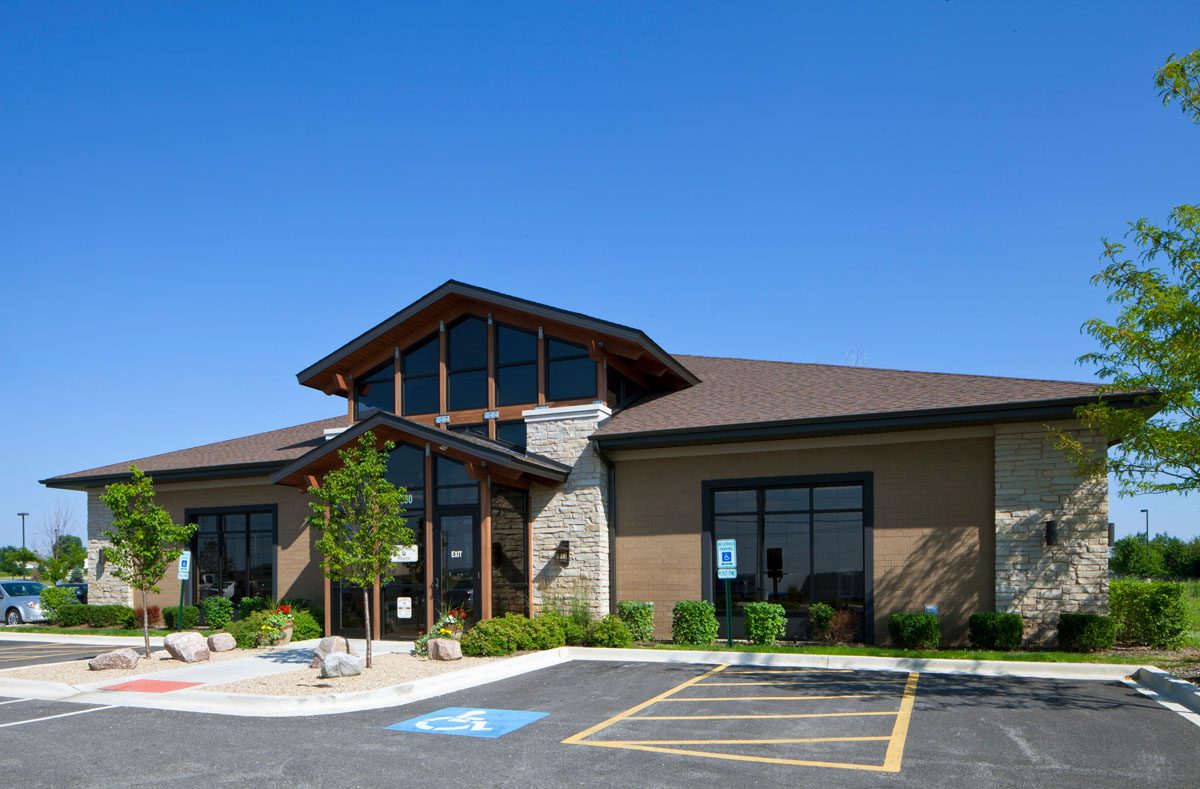
Veterinary Clinic & Animal Hospital Roofing in Austin, TX
- About
- Services
- All Services
- Built-Up Roofing Aust
- Commercial Roof Coatings Aust
- Commercial Roof Condition Reporting Aust
- Commercial Roof Inspections Aust
- Commercial Roof Leak Repair Aust
- Commercial Roof Maintenance Aust
- Commercial Roof Repair Aust
- Commercial Roof Replacement Aust
- Commercial Skylight Repair Aust
- EPDM Roofing Aust
- All Roof Systems
- Ballasted Roof Systems Aust
- Built-Up Roof (BUR) Systems Aust
- Cool Roof Systems Aust
- EPDM Roof Systems Aust
- Modified Bitumen Roof Systems Aust
- PVC Roof Systems Aust
- Silicone Roof Coating Systems Aust
- Spray Polyurethane Foam Roof Systems Aust
- Standing Seam Metal Roof Systems Aust
- TPO Roof Systems Aust
- All Industries
- EV Facility Roofing Aust
- Education Facility Roofing Aust
- Entertainment & Music Venue Roofing Aust
- Financial Services Roofing Aust
- Government Facility Roofing Aust
- Healthcare Roofing Aust
- Hospitality & Hotel Roofing Aust
- Logistics & Distribution Roofing Aust
- Semiconductor & Fab Roofing Aust
- Tech Campus Roofing Aust
- All Damage & Repair
- Fire Damage Roof Repair Aust
- Freeze Damage Roof Repair Aust
- Hail Damage Roof Repair Aust
- Insurance Claim Roof Documentation Aust
- Leak Damage Roof Repair Aust
- Storm Damage Roof Repair Aust
- Structural Roof Damage Assessment Aust
- Tornado Damage Roof Repair Aust
- Water Damage Roof Repair Aust
- Wind Damage Roof Repair Aust
- All Property Types
- Distribution Center Roofing Aust
- Manufacturing Facility Roofing Aust
- Medical Building Roofing Aust
- Multifamily Roofing Aust
- Office Building Roofing Aust
- Religious Building Roofing Aust
- Restaurant Roofing Aust
- Retail Roofing Aust
- School Roofing Aust
- Warehouse Roofing Aust
- All Capabilities
- Commercial Roof Condition Reports Aust
- Commercial Roof Inspections Aust
- Commercial Roof Moisture Surveys Aust
- Commercial Roof Zone Mapping Aust
- Competitive Bid Coordination
- Infrared Roof Scanning Aust
- Manufacturer Warranty Management
- Owner Rep Services — Commercial Roofing Aust
- Replacement vs. Recover Analysis Aust
- Roof Asset Management Aust
Austin's commercial market stretches from the Domain and North Austin tech corridor along US-183 to the South Lamar and East Cesar Chavez redevelopment zones, with major industrial activity in Round Rock and Pflugerville. Veterinary clinics and animal hospitals in this market present scheduling and safety constraints specific to facilities where animal welfare governs the work window — surgery and treatment schedules, boarding facility occupancy, and odor-control HVAC penetration requirements all factor into the project coordination plan before mobilization.
Recover Analysis Aust Roof Asset Management Aust Locations Contact About Us Property Type Medical Building Roofing Austin's medical campus inventory — Dell Medical School at UT Austin, the Seton/Dell Children's cluster on 38th Street, and the St.
The business case for proactive veterinary facility roofing in Austin is sharpest for practices that own their building — the roof is a capital asset that protects a physical plant investment that may represent the practice's largest single asset after goodwill. A veterinary hospital that sells or refinances with a deferred roof maintenance situation faces the same valuation discount as any other commercial property: the buyer or lender demands a credit equal to 1.5-2x the estimated replacement cost because they're buying the risk. A practice with a current, warranted roof is a cleaner asset at transaction time.
For veterinary practices that lease their facility in Austin, the business case for engaging with the landlord's roofing maintenance program is about protecting the practice from the operational disruption that a failed landlord roof creates. A vet practice that has operated in the same location for 15 years and built its client base around that location faces genuine business risk if a roofing failure forces a temporary closure or a rapid relocation. Proactively maintaining the relationship with the landlord's facility maintenance program — and documenting the practice's requests for roof maintenance in writing — protects the practice's ability to enforce the landlord's repair obligations when they become urgent.
AAHA (American Animal Hospital Association) accreditation includes facility standards that reflect professional assessment of a veterinary hospital's physical plant. A practice seeking or maintaining AAHA accreditation benefits from a documented, well-maintained building envelope as evidence that the facility meets the physical plant standards that accreditation requires. Accredited practices typically command premium fees and attract referring practices — and the facility documentation that roofing maintenance provides supports the accreditation case that the physical plant is professionally managed.
Veterinary Clinic Roofing — Business & ROI Questions
A veterinary practice or hospital building sold or refinanced with deferred roofing maintenance faces a buyer credit or lender condition that typically runs 1.5-2x the estimated re-roofing cost. Buyers of veterinary practice real estate apply a risk premium to buildings with uncertain roof conditions because they're inheriting both the capital expenditure and the operational disruption risk. A current warranty and recent inspection records remove this discount from the transaction. For practices planning a sale or refinance in the next 2-3 years, proactive re-roofing provides a demonstrably positive return on investment at the transaction.
A full-service veterinary hospital in Austin generating $150,000-300,000 per month in revenue loses $5,000-10,000 per day during a forced closure for roofing emergency repair. Add the emergency repair cost premium (typically 30-50% above planned replacement cost), the equipment damage from water intrusion, the staff overtime and scheduling disruption, and the client attrition from cancelled appointments, and the total cost of a significant roofing failure event easily reaches $50,000-100,000 or more. The proactive re-roofing investment is a fraction of this exposure.
AAHA accreditation standards include facility requirements addressing sanitation, safety, and physical plant condition. While the standards don't specifically require a current roof warranty, the conditions that a failing roof creates — mold risk in HVAC systems, water damage to sterilization equipment, compromised isolation areas — directly affect AAHA compliance. An accreditation consultant who visits a facility with visible water damage will note it as a physical plant deficiency. A documented maintenance program and current warranty are positive evidence in an accreditation review.
Veterinary hospitals run climate control systems continuously — surgical suites require precise temperature control, isolation wards require specific air exchange rates, and boarding areas require consistent comfort conditions. A re-roofing project that upgrades insulation from R-13 to R-25 reduces the HVAC energy load that maintains these conditions. For a full-service animal hospital spending $60,000-100,000 annually on energy in Austin's climate, improved insulation provides $6,000-15,000 in annual energy savings — a meaningful contribution to the re-roofing investment payback.
Yes — capital improvement coordination reduces disruption. A practice planning a boarding expansion, a surgery suite upgrade, or a diagnostic imaging installation in the next 2-3 years should sequence the roofing project before the interior work. A re-roofed building with a current warranty is the correct foundation for interior capital improvements. Re-roofing after new equipment is installed creates the risk of equipment damage during the roofing project and typically costs more because the schedule has to work around newly installed interior infrastructure.
Commercial roofing for veterinary clinic & animal hospital roofing in Austin, TX — specifications, scheduling, and project coordination for this building type.
Austin's warehouse inventory — from Del Valle's SH 130 logistics corridor to the East Austin industrial pockets — has added millions of square feet in the last decade. We scope, replace, and maintain large-deck commercial flat roofs sized for the operational demands of distribution and storage use.
Austin's warehouse market expanded significantly when SH 130 opened a viable alternative to I-35 for freight movement through the metro. The Del Valle corridor south of Austin-Bergstrom International Airport has absorbed large-format logistics and fulfillment development — tilt-wall buildings in the 200,000 to 500,000 sq ft range with TPO or modified-bitumen flat roofs on open steel deck. These buildings are now hitting the 7-to-12-year maintenance window where the first membrane decisions need to be made.
East Austin's older warehouse cluster — Airport Boulevard, Springdale Road, and the industrial pockets east of I-35 between MLK and 51st — is a different inventory profile: pre-2000 buildings with built-up roofing (BUR) or modified-bitumen systems that have been patched repeatedly and are often past the recover threshold. Full replacement with TPO is the correct scope on most of these buildings, but the scope decision depends on insulation condition data, not age alone.
Warehouse roofing in the Austin market has two climate variables that drive scope decisions. First, UV load: Austin's high-UV environment degrades uncoated modified bitumen faster than manufacturers' published timelines assume, particularly on roofs with minimal shade and maximum southern exposure. Second, the SH 130 corridor's exposure category — open terrain adjacent to the highway — pushes wind-uplift requirements into Exposure C for many buildings, which tightens fastener pattern density requirements and affects parapet attachment details.
Large-Deck Roof Replacement in the Del Valle Corridor
Del Valle's SH 130 logistics buildings are some of the largest single-roof-footprint commercial projects we scope. A 400,000 sq ft warehouse has a roof that requires phased tear-off and dry-in sequencing — opening the entire deck simultaneously is never the right plan. We divide large decks into 20,000 to 30,000 sq ft production zones, complete tear-off, insulation placement, and TPO membrane installation with same-day dry-in in each zone before moving to the next.
Tilt-wall construction dominates this corridor. The parapet-to-wall interface on tilt-wall panels is a documented chronic leak point — thermal movement at the metal coping cap degrades sealants on a 5-to-8-year cycle regardless of initial installation quality. Our scope walks on Del Valle tilt-wall buildings always include systematic documentation of coping joint condition, through-wall flashing condition, and interior drain leader pipe access. These details drive repair-vs-replace decisions independent of membrane condition.
Loading dock roof overhangs and exterior canopies on large warehouse buildings need separate scoping from the main field. Dock canopies have different drainage geometry, different wind exposure at the building edge, and in some buildings, different deck material than the main field. We scope them separately and include them in the same project when it is logistically practical to sequence the work.
East Austin Warehouse Inventory
The East Austin warehouse cluster predates the SH range from 1970s concrete-frame with aggregate-surfaced BUR systems to early-2000s steel-frame with modified bitumen. The 1970s and 1980s buildings in this cluster are the most common full-replacement candidates — BUR systems past their expected service life, insulation saturated beyond the recover threshold, and deck condition that requires inspection ports before any scope is finalized.
Austin's development pressure on East Austin has added an ownership transition layer: buildings purchased for redevelopment are sometimes in limbo — the owner knows redevelopment is 3 to 7 years out and does not want to invest in full replacement. In those cases, we scope minimum-intervention repairs to keep the building dry through the hold period rather than recommending full replacement that will be demolished. That is the honest scope for the situation.
Operating Constraints on Warehouse Roofing
Active warehouse operations create constraints that standard commercial roofing projects do not face. Forklift traffic through loading bays means crane positioning cannot block dock access without shutting down inbound freight — unacceptable to a 24/7 fulfillment operation. Material staging on the roof must account for live load limits on open steel deck. Roof access during production cannot coincide with rack replenishment operations directly below the tear-off zone.
We develop a construction logistics plan for every active-warehouse project before mobilization: dock access windows, roof staging zone load limits, daily production zone mapping shared with warehouse management the morning before each shift, and a communication protocol for the facility coordinator. The roof crew does not make operational decisions — the plan sets the rules before the project starts.
Can a warehouse roof be replaced while the building is in full operation?
Yes, with a phased sequence and a written logistics plan. We work in zones sized so that no section is open overnight and no zone's production footprint blocks dock access or interior aisles below. The sequence requires daily coordination with facility management, but full closure is not necessary on any warehouse project we have scoped in the Del Valle or East Austin corridors.
What is the right membrane for a large Austin warehouse?
TPO 60-mil is the standard specification for most Austin warehouse replacements — white reflective surface, heat-weldable seams, 20-year NDL warranty path, and good performance in Austin's UV environment. 80-mil is worth the additional cost per square for buildings near the SH 130 corridor with Exposure C wind classification or documented hail history. Modified bitumen recover is sometimes appropriate for buildings with dry insulation and BUR base that are not yet at the replacement threshold.
Does the City of Austin or Travis County require permits for large warehouse re-roofing?
Yes. The City of Austin Development Services Department requires a permit for commercial re-roofing projects. Del Valle properties may fall under Travis County jurisdiction rather than City of Austin jurisdiction depending on the parcel — we confirm the permitting authority during pre-construction setup and pull the applicable permit. Permit timelines in Travis County have run 10 to 20 business days for large commercial projects.
Get a written scope for your Austin warehouse roof.
Our project managers cover the Del Valle corridor, East Austin, and all Travis and Williamson County industrial submarkets. We deliver a written condition report with moisture core data within five business days of the site visit.
- Fast Food Qsr Roofing
- Retail Roofing
- Grocery Store Roofing
- Industrial Flex Space Roofing
- Automotive Manufacturing Roofing
- Roof Asset Management Program
- Government Building Roofing
- Commercial Roof Maintenance
Leak points, drainage, seams, penetrations, edge metal, roof access, and interior risk should be clear before the next roof decision is priced.
Immediate repair, maintenance, coating, recover, and replacement choices should be measured against roof age, moisture risk, tenant disruption, and budget timing.
A site visit is useful when the owner needs a documented roof condition, active leak response, storm review, or a clearer capital plan.