
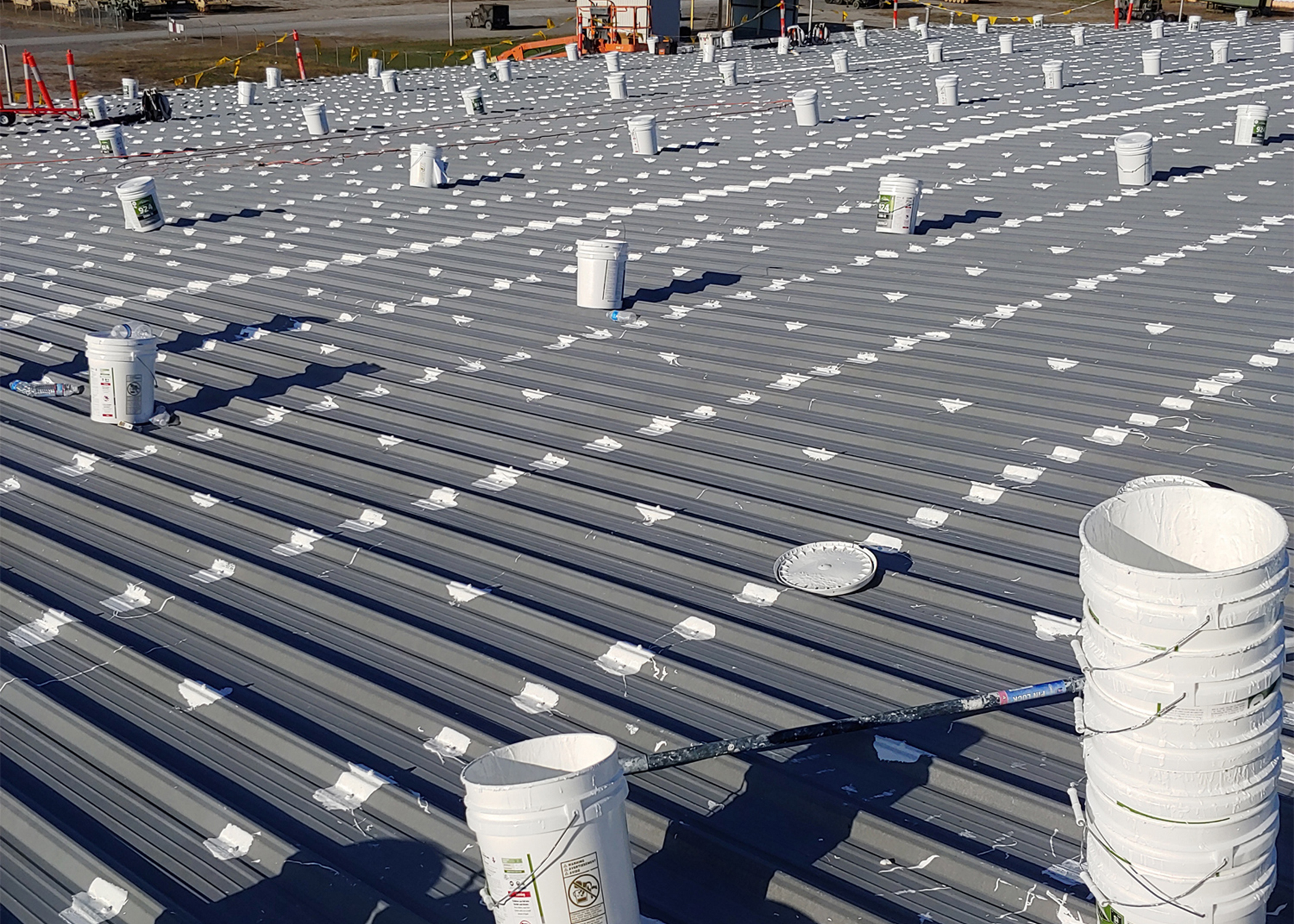
Silicone Roof Coating in Austin, TX
- About
- Services
- All Services
- Built-Up Roofing Aust
- Commercial Roof Coatings Aust
- Commercial Roof Condition Reporting Aust
- Commercial Roof Inspections Aust
- Commercial Roof Leak Repair Aust
- Commercial Roof Maintenance Aust
- Commercial Roof Repair Aust
- Commercial Roof Replacement Aust
- Commercial Skylight Repair Aust
- EPDM Roofing Aust
- All Roof Systems
- Ballasted Roof Systems Aust
- Built-Up Roof (BUR) Systems Aust
- Cool Roof Systems Aust
- EPDM Roof Systems Aust
- Modified Bitumen Roof Systems Aust
- PVC Roof Systems Aust
- Silicone Roof Coating Systems Aust
- Spray Polyurethane Foam Roof Systems Aust
- Standing Seam Metal Roof Systems Aust
- TPO Roof Systems Aust
- All Industries
- EV Facility Roofing Aust
- Education Facility Roofing Aust
- Entertainment & Music Venue Roofing Aust
- Financial Services Roofing Aust
- Government Facility Roofing Aust
- Healthcare Roofing Aust
- Hospitality & Hotel Roofing Aust
- Logistics & Distribution Roofing Aust
- Semiconductor & Fab Roofing Aust
- Tech Campus Roofing Aust
- All Damage & Repair
- Fire Damage Roof Repair Aust
- Freeze Damage Roof Repair Aust
- Hail Damage Roof Repair Aust
- Insurance Claim Roof Documentation Aust
- Leak Damage Roof Repair Aust
- Storm Damage Roof Repair Aust
- Structural Roof Damage Assessment Aust
- Tornado Damage Roof Repair Aust
- Water Damage Roof Repair Aust
- Wind Damage Roof Repair Aust
- All Property Types
- Distribution Center Roofing Aust
- Manufacturing Facility Roofing Aust
- Medical Building Roofing Aust
- Multifamily Roofing Aust
- Office Building Roofing Aust
- Religious Building Roofing Aust
- Restaurant Roofing Aust
- Retail Roofing Aust
- School Roofing Aust
- Warehouse Roofing Aust
- All Capabilities
- Commercial Roof Condition Reports Aust
- Commercial Roof Inspections Aust
- Commercial Roof Moisture Surveys Aust
- Commercial Roof Zone Mapping Aust
- Competitive Bid Coordination
- Infrared Roof Scanning Aust
- Manufacturer Warranty Management
- Owner Rep Services — Commercial Roofing Aust
- Replacement vs. Recover Analysis Aust
- Roof Asset Management Aust
Silicone fluid-applied coating is a legitimate life-extension option for qualifying Austin commercial roofs — not a substitute for repair, but a documented system with manufacturer warranties of 10 to 20 years on properly prepared substrates.
Silicone roof coating applied to a qualifying commercial flat roof in Austin can extend membrane service life by 10 to 20 years at a fraction of the cost of full replacement. The operative word is qualifying. A silicone coating applied over a roof with wet insulation, compromised flashings, or active seam failure does not fix those problems — it bridges over them temporarily while they continue deteriorating below the coating layer. The coating fails, usually within the first Austin rain season, and the building owner has spent coating cost without buying real service life.
On a substrate that genuinely qualifies — dry insulation confirmed by core sampling, sound flashings, no active seam failure, clean and primed surface — silicone performs well in Central Texas conditions. Silicone does not degrade from UV exposure the way acrylic does; Austin's 300-plus days of annual sunshine do not cause the same chalking and surface erosion that would shorten an acrylic coating's life. Silicone also maintains flexibility in Austin's temperature range — from sub-freezing February nights to 165°F surface peaks in July — without the cracking that affects less flexible coatings at thermal cycling joints.
The decision to coat versus recover versus replace is a capital decision, and it requires real data. Our coating assessments include core sampling at representative locations, documented drain and flashing condition, and a written recommendation that specifies whether coating is the honest option or whether the roof's condition requires more intervention before coating is viable. We deliver that in writing before any contract.
Qualifying Substrates and Pre-Coating Assessment
Silicone coating adheres to TPO, EPDM, modified bitumen, BUR, spray polyurethane foam (SPF), and metal panel substrates when properly primed. Each substrate requires a different primer chemistry and surface preparation protocol. TPO and EPDM require abrasion cleaning and a silicone-compatible primer applied to a dry, contaminated-free surface. BUR aggregate surfaces require a ply of polyester reinforcement fabric embedded in the first silicone coat at seams and flashings before the field coat — the aggregate texture alone does not provide adequate coating adhesion.
Core sampling is non-negotiable before coating. If cores show wet insulation in more than 10 to 15 percent of sampled area, coating is not the right scope — the wet zones need to be opened and remediated before any coating application. We do not approve our own coating jobs on roofs that fail the core test; the coating manufacturer's warranty requires documented substrate qualification, and an honest assessment is cheaper than a failed coating system.
Drain and flashing condition must be addressed before coating. Clogged drains create ponding that exceeds silicone's ponding water resistance on most products — most silicone coatings are rated for intermittent ponding, not permanent standing water. Compromised base flashings at penetrations need repair or replacement before the coating is applied over them; coating over a failed flashing produces a cosmetic bridge that fails on the first significant rainfall.
Application Process and Mil Thickness
Applied mil thickness governs service life and warranty tier on silicone coatings. Industry standard tiers run: 20 dry mils for a 10-year warranty, 25 dry mils for a 15-year warranty, and 30 dry mils or more for a 20-year warranty. Mil thickness is applied in two coats minimum — a base coat that penetrates the substrate and a topcoat that builds thickness. Single-coat application to full mil specification is not reliable on the textured substrates common on Austin commercial roofs; two-coat minimum is our standard.
Application weather in Austin requires planning. Silicone cannot be applied to a wet surface or when rain is forecast within four hours. Austin's spring convective weather pattern — fast-moving cells that develop over the Edwards Plateau and move east with little radar warning time — makes April and May application scheduling conservative. We track radar actively on coating days and maintain a weather hold protocol that suspends application when convective probability exceeds the manufacturer's threshold.
The finished coating surface on a white or reflective product will reduce roof surface temperature significantly on Austin commercial buildings during summer. A dark BUR surface running 165°F in July can drop to the 100–110°F range under a white silicone coating — a 50-plus degree reduction that translates to lower cooling loads for the building below. For Domain-area office properties pursuing ENERGY STAR recertification, this surface temperature reduction can be documented for the certification submission.
Warranties and Post-Coating Maintenance
Silicone coating warranties from major manufacturers — Tremco, GE (Momentive), Polyglass, and others — are issued at the factory level and require the manufacturer's representative to inspect the completed application before issuing the warranty document. We schedule that inspection as part of the closeout sequence; the warranty does not issue until the inspection passes.
Post-coating maintenance is simpler than post-replacement maintenance on single-ply systems: annual inspection, drain clearing, and sealant renewal at penetrations are the typical manufacturer requirements. The coating surface itself is self-sealing for minor punctures below a certain size — small fastener holes or minor mechanical damage reseal without treatment in many silicone formulations. Significant membrane puncture or flashing failure still requires prompt repair.
Recoatability is silicone's significant long-term advantage. At the end of the initial warranty period, a silicone-coated roof can receive a topcoat of new silicone without primer on properly prepared surfaces — extending the warranty another cycle without tear-off or recover. An Austin commercial building that coats at age 15 and recoats at age 25 can potentially reach 35 years of documented service life on the original membrane, which changes the capital planning math meaningfully.
Does Austin's ponding water problem disqualify silicone coating?
Austin's drainage constraints from the Edwards Plateau substrate mean many commercial flat roofs have chronic ponding zones. Silicone is more ponding-tolerant than acrylic but is not rated for permanent standing water. Before coating any Austin roof with documented ponding, we address the drainage first — drain riser adjustment, tapered insulation fill at chronic pond locations, or drain addition. Coating over a persistent pond is not an option we recommend.
What happens if it rains on a fresh silicone coat?
Rain on uncured silicone coating causes surface wash-out, pinhole formation, and in severe cases full delamination of the wet coat. We do not apply silicone when rain is forecast within the manufacturer's specified cure window — typically four to six hours depending on ambient temperature and humidity. Austin's spring storm pattern means we monitor radar from before first coat until the day's work is confirmed cured. If a storm develops unexpectedly, we stop application and cover staging equipment. Improperly applied silicone that washed out is the applicator's cost to remediate, not the owner's.
Can silicone coating be applied over an existing TPO or EPDM membrane that is nearing the end of its warranty?
Yes, subject to the substrate qualification criteria above. A TPO membrane at year 17 of a 20-year warranty — still structurally sound with dry insulation and sound flashings — is a legitimate coating candidate. The coating resets the service life clock and protects the substrate from continued UV exposure. The original TPO manufacturer's warranty does not transfer to the new coating; the silicone coating manufacturer issues a new warranty from the coating installation date.
Find out if your Austin building qualifies for silicone coating.
Our project managers will pull cores, document drain and flashing condition, and give you a written recommendation on whether coating is the honest scope or whether the roof needs more intervention first.
- Solar Roof Integration
- Commercial Roof Maintenance
- Parapet Wall Repair
- Condition Reporting
- Office Building Roofing
- Preventive Roof Maintenance
- Auto Dealership Roofing
- About
Leak points, drainage, seams, penetrations, edge metal, roof access, and interior risk should be clear before the next roof decision is priced.
Immediate repair, maintenance, coating, recover, and replacement choices should be measured against roof age, moisture risk, tenant disruption, and budget timing.
A site visit is useful when the owner needs a documented roof condition, active leak response, storm review, or a clearer capital plan.