
Entertainment & Music Venue Roofing in Austin, TX
- About
- Services
- All Services
- Built-Up Roofing Aust
- Commercial Roof Coatings Aust
- Commercial Roof Condition Reporting Aust
- Commercial Roof Inspections Aust
- Commercial Roof Leak Repair Aust
- Commercial Roof Maintenance Aust
- Commercial Roof Repair Aust
- Commercial Roof Replacement Aust
- Commercial Skylight Repair Aust
- EPDM Roofing Aust
- All Roof Systems
- Ballasted Roof Systems Aust
- Built-Up Roof (BUR) Systems Aust
- Cool Roof Systems Aust
- EPDM Roof Systems Aust
- Modified Bitumen Roof Systems Aust
- PVC Roof Systems Aust
- Silicone Roof Coating Systems Aust
- Spray Polyurethane Foam Roof Systems Aust
- Standing Seam Metal Roof Systems Aust
- TPO Roof Systems Aust
- All Industries
- EV Facility Roofing Aust
- Education Facility Roofing Aust
- Entertainment & Music Venue Roofing Aust
- Financial Services Roofing Aust
- Government Facility Roofing Aust
- Healthcare Roofing Aust
- Hospitality & Hotel Roofing Aust
- Logistics & Distribution Roofing Aust
- Semiconductor & Fab Roofing Aust
- Tech Campus Roofing Aust
- All Damage & Repair
- Fire Damage Roof Repair Aust
- Freeze Damage Roof Repair Aust
- Hail Damage Roof Repair Aust
- Insurance Claim Roof Documentation Aust
- Leak Damage Roof Repair Aust
- Storm Damage Roof Repair Aust
- Structural Roof Damage Assessment Aust
- Tornado Damage Roof Repair Aust
- Water Damage Roof Repair Aust
- Wind Damage Roof Repair Aust
- All Property Types
- Distribution Center Roofing Aust
- Manufacturing Facility Roofing Aust
- Medical Building Roofing Aust
- Multifamily Roofing Aust
- Office Building Roofing Aust
- Religious Building Roofing Aust
- Restaurant Roofing Aust
- Retail Roofing Aust
- School Roofing Aust
- Warehouse Roofing Aust
- All Capabilities
- Commercial Roof Condition Reports Aust
- Commercial Roof Inspections Aust
- Commercial Roof Moisture Surveys Aust
- Commercial Roof Zone Mapping Aust
- Competitive Bid Coordination
- Infrared Roof Scanning Aust
- Manufacturer Warranty Management
- Owner Rep Services — Commercial Roofing Aust
- Replacement vs. Recover Analysis Aust
- Roof Asset Management Aust
Austin's entertainment and music venue infrastructure runs from Moody Center and ACL Live to the Stubb's amphitheater and Austin Studios' production facilities. These buildings have large-span roof structures, event-calendar scheduling constraints, and acoustic environments that make roofing work more complex than standard commercial.
Moody Center — the 15,000-seat arena at the University of Texas at Austin campus that replaced the Frank Erwin Center — opened in 2022 and is the anchor of Austin's large-venue entertainment infrastructure. The arena's roof spans a column-free bowl that seats 15,000, and the roofing assembly on a structure of this scale has specific requirements around dead load, drainage design, and membrane attachment that differ categorically from standard commercial flat roofing. The adjacent Frank Erwin Center site is in the redevelopment planning phase, adding to the UT campus construction context around the arena.
ACL Live at the Moody Theater — the 2,750-capacity music venue at — is Austin's premier mid-capacity indoor music venue and the home of Austin City Limits, the longest-running music series in American television history. The venue's show schedule runs year-round, with specific production windows between booked events. Roofing work on ACL Live requires coordination with the venue's production calendar — there is no off-season.
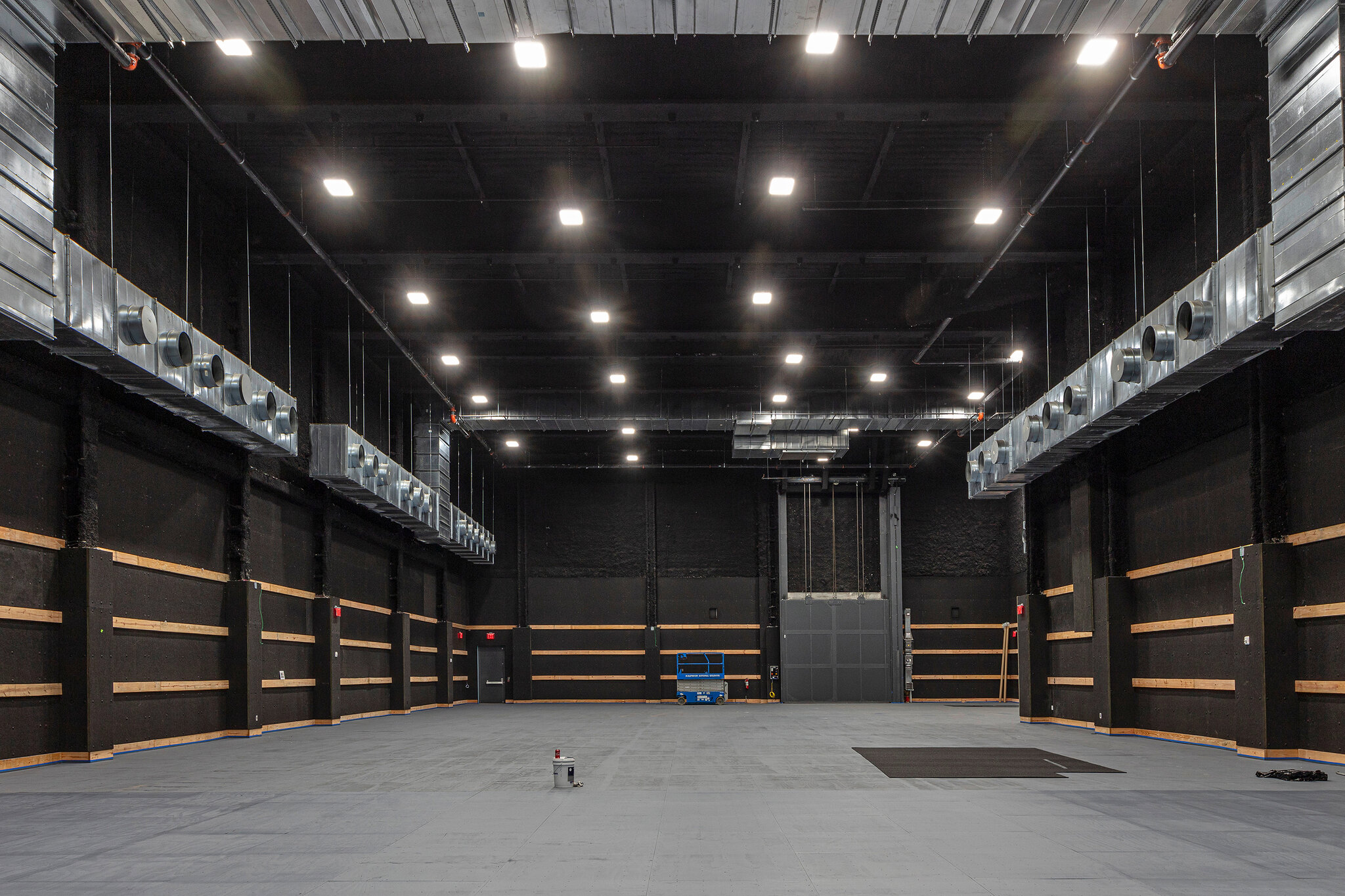
Austin Studios on Airport Boulevard — formerly the Austin Police Department's mounted patrol facility, converted to film and television production use — is one of the few dedicated studio production facilities in Texas outside the Houston market. Production soundstages have specific acoustic isolation requirements that affect how roofing work is sequenced relative to active production schedules.
Large-span arena roofs — Moody Center's column-free structure spans the full bowl — have structural requirements that differ from conventional commercial construction. Rooftop dead loads from HVAC systems serving an arena-scale air handling requirement are substantially higher than office or warehouse buildings. Fastener pattern calculations must account for the specific structural framing geometry of the arena roof, not a standard commercial deck pattern.
Arena drainage design must handle the full precipitation event that the arena's large roof footprint intercepts — a one-inch rainfall event on Moody Center's roof footprint produces a large volume of runoff that must drain without exceeding the drain system's capacity. We review drain capacity documentation before specifying any roofing recover or replacement scope that could affect drain flow rates.
UT Austin's Facilities Services department manages roofing maintenance at Moody Center under the University's capital project procurement process. The arena's event calendar — Longhorn basketball, large-format concerts, and UT graduation — creates specific blackout windows when no overhead work is possible. We coordinate production scheduling with UT Facilities Services and the arena's operations team.
ACL Live and Mid-Capacity Music Venue Roofing
ACL Live's production calendar runs roughly 200 events per year — advance booking makes the venue's schedule relatively predictable 12 to 18 months out. Identifying production windows between booked events is the first step in any roofing scope for ACL Live. We coordinate production window identification with the venue's production management team, not with the building owner's facilities contact, because the production schedule is what governs actual availability.
Music venue buildings have acoustic isolation requirements that standard commercial buildings do not — the interior acoustic environment of an active recording venue is a designed system, and penetration details, flashing configurations, and drain connections that introduce exterior sound transmission can affect the acoustic design. We review acoustic isolation requirements with the venue's facility team before finalizing penetration and drain flashing details.
The 6th Street and Rainey Street corridor venues — bars, clubs, and live music rooms — have a different profile from ACL Live but similar scheduling constraints. Many operate Thursday through Sunday with heavy use; weekday morning windows during business hours are the available production time for roofing crews. We design production plans around the specific operating schedule of each venue.
Austin Studios and Production Facility Roofing
Austin Studios' soundstages have acoustic isolation requirements that make roofing production during active shoots impossible — pneumatic tear-off equipment and drills produce vibration and airborne noise that penetrates soundstage walls. We coordinate production windows with Austin Studios' production schedule, which runs in waves of production activity separated by prep and strike periods where the stages are not in active shoot. Strike and prep periods are the correct roofing window.
Film and television production soundstages have roofing requirements around penetration locations that differ from standard commercial buildings — camera crane tracks, lighting grid support points, and ventilation penetrations are all designed to specific acoustic and visual requirements. Any penetration modification as part of a roofing scope requires coordination with Austin Studios' production engineering team before the change is made.
Airport Boulevard's proximity to ABIA creates crane height constraints for the Austin Studios site — the same crane height restriction zone that applies to FedEx and other ABIA-adjacent facilities applies here. We identify crane height limits in the pre-scope walk and design material handling accordingly.
How do you identify production windows for roofing work at a venue like ACL Live with a dense event calendar?
We request the venue's confirmed booking calendar 12 to 18 months out and identify windows between booked events that are long enough for the required production phase. For ACL Live, this typically means major production phased into two or three windows across multiple months rather than a single continuous production run. The phased approach is documented in the scope and priced accordingly — it costs more than a single continuous production run, but it is the correct approach for an active venue.
Can roofing work proceed on a soundstage building during active production?
No — pneumatic tear-off, core drilling, and most roofing production operations produce vibration and airborne noise that compromises active production audio. We identify the production schedule in the pre-scope phase and design the production window around prep and strike periods when the stages are not in active shoot. If the production schedule does not have adequate windows in the near term, we provide a forward-looking schedule recommendation rather than forcing the scope into an incompatible window.
What are the specific roofing requirements for a large-span arena like Moody Center?
Large-span arena roofs have structural dead-load requirements, drain capacity requirements, and fastener pattern calculations that differ from standard commercial construction. We review the structural documentation and drain capacity specifications before writing any scope for a large-span structure — we do not apply a standard commercial spec to an arena roof. Scope documentation for UT-managed facilities like Moody Center also follows UT's capital project reporting format.
Get an entertainment venue roofing scope in Austin.
We work around your event calendar, not against it. Our project managers will coordinate with your production team, identify the right production windows, and deliver a scope that protects your venue and your booked events.
- Tech Roofing
- Logistics Roofing
- Hospitality Roofing
- Government Roofing
- Food Processing Cold Storage
- Commercial Roof Repair
- Standing Seam Metal Roofing
- Multifamily Roofing
Leak points, drainage, seams, penetrations, edge metal, roof access, and interior risk should be clear before the next roof decision is priced.
Immediate repair, maintenance, coating, recover, and replacement choices should be measured against roof age, moisture risk, tenant disruption, and budget timing.
A site visit is useful when the owner needs a documented roof condition, active leak response, storm review, or a clearer capital plan.