
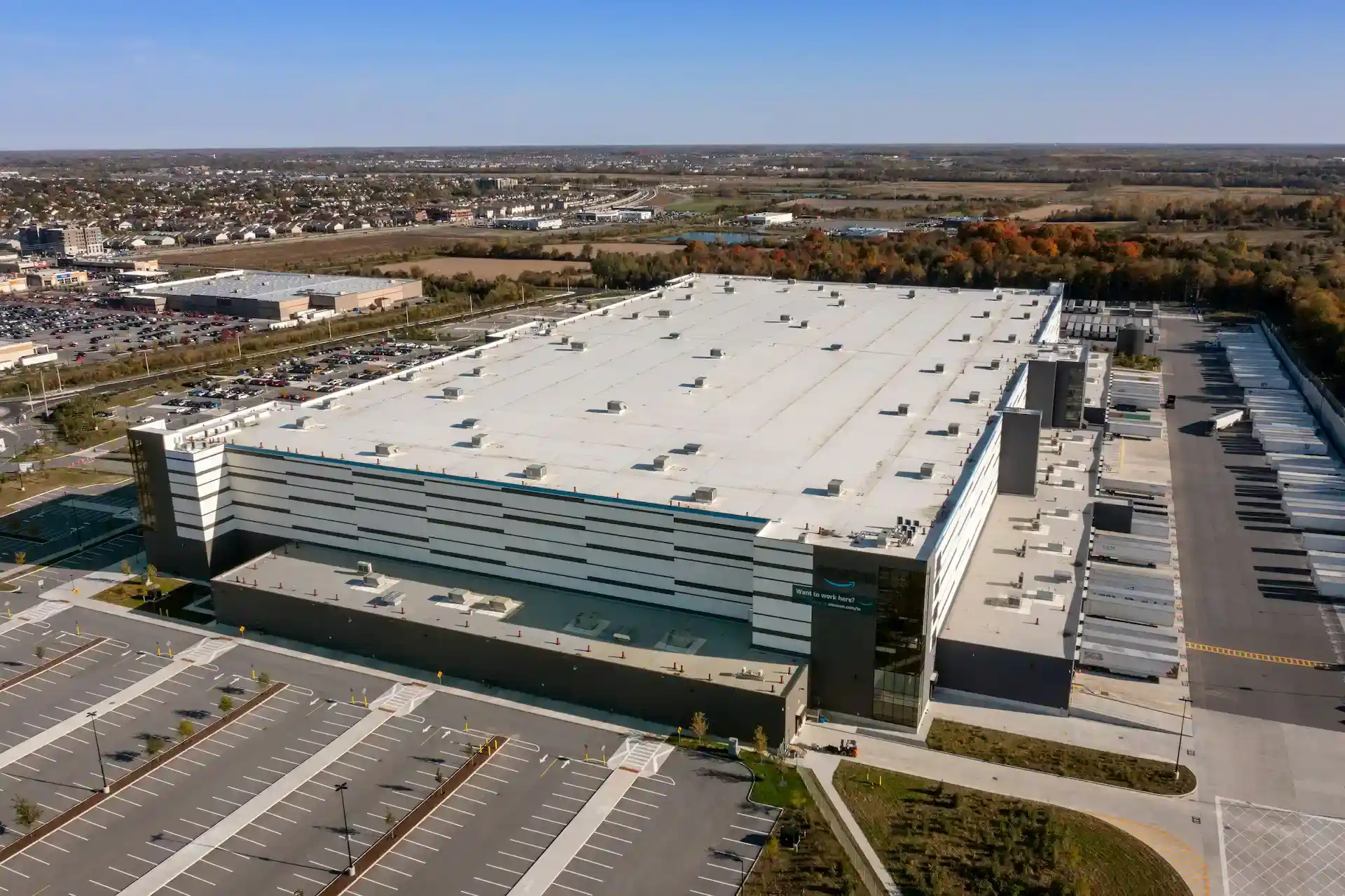
Warehouse and Distribution Center Roofing in Austin, TX
- About
- Services
- All Services
- Built-Up Roofing Aust
- Commercial Roof Coatings Aust
- Commercial Roof Condition Reporting Aust
- Commercial Roof Inspections Aust
- Commercial Roof Leak Repair Aust
- Commercial Roof Maintenance Aust
- Commercial Roof Repair Aust
- Commercial Roof Replacement Aust
- Commercial Skylight Repair Aust
- EPDM Roofing Aust
- All Roof Systems
- Ballasted Roof Systems Aust
- Built-Up Roof (BUR) Systems Aust
- Cool Roof Systems Aust
- EPDM Roof Systems Aust
- Modified Bitumen Roof Systems Aust
- PVC Roof Systems Aust
- Silicone Roof Coating Systems Aust
- Spray Polyurethane Foam Roof Systems Aust
- Standing Seam Metal Roof Systems Aust
- TPO Roof Systems Aust
- All Industries
- EV Facility Roofing Aust
- Education Facility Roofing Aust
- Entertainment & Music Venue Roofing Aust
- Financial Services Roofing Aust
- Government Facility Roofing Aust
- Healthcare Roofing Aust
- Hospitality & Hotel Roofing Aust
- Logistics & Distribution Roofing Aust
- Semiconductor & Fab Roofing Aust
- Tech Campus Roofing Aust
- All Damage & Repair
- Fire Damage Roof Repair Aust
- Freeze Damage Roof Repair Aust
- Hail Damage Roof Repair Aust
- Insurance Claim Roof Documentation Aust
- Leak Damage Roof Repair Aust
- Storm Damage Roof Repair Aust
- Structural Roof Damage Assessment Aust
- Tornado Damage Roof Repair Aust
- Water Damage Roof Repair Aust
- Wind Damage Roof Repair Aust
- All Property Types
- Distribution Center Roofing Aust
- Manufacturing Facility Roofing Aust
- Medical Building Roofing Aust
- Multifamily Roofing Aust
- Office Building Roofing Aust
- Religious Building Roofing Aust
- Restaurant Roofing Aust
- Retail Roofing Aust
- School Roofing Aust
- Warehouse Roofing Aust
- All Capabilities
- Commercial Roof Condition Reports Aust
- Commercial Roof Inspections Aust
- Commercial Roof Moisture Surveys Aust
- Commercial Roof Zone Mapping Aust
- Competitive Bid Coordination
- Infrared Roof Scanning Aust
- Manufacturer Warranty Management
- Owner Rep Services — Commercial Roofing Aust
- Replacement vs. Recover Analysis Aust
- Roof Asset Management Aust
Commercial roofing for warehouses, distribution centers, and industrial facilities throughout Austin, TX. TPO, EPDM, and metal roof systems.
The Amazon distribution center in Del Valle, serving the greater Austin metropolitan area, is among the most prominent examples of the large-footprint industrial roofing market that has expanded dramatically alongside Austin's technology and logistics boom. Travis and Williamson counties have absorbed millions of square feet of new warehouse and distribution space over the past decade, and roofing contractors who understand Central Texas's specific climate challenges are in consistent demand from operators running 24-hour facilities that cannot tolerate roofing failures.
Central Texas heat is the defining climate stressor for Austin warehouse roofing. Austin regularly logs 90+ days per year with temperatures above 100°F, and roof surface temperatures on a dark or medium-colored membrane can exceed 180°F on a still August afternoon. These extreme surface temperatures drive thermal degradation of polymer membranes, accelerate sealant breakdown at flashing terminations, and create significant thermal expansion and contraction cycles that stress mechanically-fastened seam systems. White TPO membranes with high solar reflectance are the standard specification for Austin warehouse roofing, reducing surface temperatures by 50°F or more compared to darker alternatives.
Austin's rainfall is episodic and intense rather than evenly distributed. The city averages about 34 inches annually, but much of that total arrives in heavy spring and fall thunderstorm events. Drought conditions in summer can be followed by multi-inch rainfall events in a single day when Pacific or Gulf moisture surges arrive. For large warehouse roofs, this means drainage systems must handle both extended dry periods — during which debris accumulates in drains — and sudden high-volume events. Internal drain strainers should be inspected and cleared monthly during Austin's dry summer months to ensure full capacity is available when fall thunderstorm season begins.
Hail risk in Central Texas is substantial. The region sits within the "hail alley" zone that extends from Texas through Oklahoma and into Kansas, and Austin experiences hail events multiple times per year. Hailstones of 1 inch or larger are not uncommon in severe spring thunderstorms, and the impact-resistance requirements for warehouse roofing in the Austin area have been elevated by insurers in recent years. FM Global-rated assemblies with impact resistance class 1 or higher are increasingly required by property insurers, and operators who specify FM-approved systems often receive premium discounts that partially offset the cost premium.
Dock door and truck court flashing at Austin's large distribution centers must account for the thermal expansion driven by Central Texas heat. Metal dock canopy flashings see surface temperatures that can vary by 100°F or more between winter nights and summer days, and rigid flashing details without expansion joints or slip connections will fail prematurely. The Travis County permitting office requires commercial roofing submittals to demonstrate code-compliant flashing details, and experienced Austin commercial roofing contractors provide engineered shop drawings that satisfy these requirements as a standard part of the bid and permitting process.
Ventilation and forklift exhaust management on Austin's warehouse roofs is shaped by the need to remove heat from what are already hot building interiors. Large distribution facilities running propane forklifts must exhaust combustion gases while managing the thermal load that exhaust ventilation adds to the building's cooling burden. Rooftop make-up air units on Austin warehouses run aggressively during summer months, creating roof penetration and mechanical curb conditions that must be maintained and resealed regularly given the thermal cycling they experience.
Energy efficiency is a primary operating cost concern for Austin warehouse operators. Austin Energy — the city-owned utility — has historically offered commercial efficiency incentive programs that reward cool roof installations and above-code insulation upgrades. The Texas IECC adopts commercial energy code standards that include minimum cool roof requirements for Climate Zone 2, which covers the Austin area. For a large climate-controlled distribution facility spending $30,000 to $50,000 per month on electricity during Austin's summer, the operating cost impact of a high-reflectance roof membrane is a real financial consideration, not just a green building talking point.
Cost per square foot for warehouse roofing in Austin reflects the market's strong growth and active contractor base. TPO re-roofing on a large Travis or Williamson County distribution center runs $7 to $12 per square foot installed; full tear-off with new insulation typically ranges from $14 to $19 per square foot. The competitive bidding environment created by Austin's warehouse construction boom has kept pricing relatively accessible, and operators who bundle multiple facilities under a single service agreement often negotiate favorable rates from established Central Texas contractors.
Warranty management and documentation have become critical concerns as institutional investors and REITs have acquired large portions of Austin's industrial real estate inventory. Roof warranties on large distribution facilities — typically 20-year NDL (no-dollar-limit) manufacturer warranties — require documented bi-annual maintenance and limit repairs to manufacturer-approved contractors. Austin warehouse owners who have transferred properties in sale transactions have learned that a properly maintained and documented roof warranty can be a significant value-added item in a commercial real estate transaction.
How can I tell if my Austin commercial building's BUR system needs replacement or just repair?
Surface condition alone is not sufficient to answer that question. Alligatoring, surface cracking, and blistering are visible indicators of stress but do not tell you whether the underlying insulation is compromised. Core sampling — pulling drill-cut plugs in five to ten locations across the roof — tells you ply count, asphalt condition through the thickness, and insulation moisture content. That data, combined with drain condition and flashing condition, gives an honest answer on repair versus replacement. We deliver the core data and our interpretation in writing; the building owner makes the capital decision.
Can a BUR roof be coated instead of replaced?
Silicone or acrylic coating over a BUR surface is viable when the system is dry, the surface is clean and primed correctly, and the drain and flashing conditions are sound. Coating a BUR roof with wet insulation or compromised flashings extends the asset's apparent condition without addressing the underlying failure — the coating will delaminate or bridge over wet zones within the first year. We assess before recommending coating; we do not coat roofs that need repair or replacement.
What is the typical cost difference between BUR repair and BUR replacement in Austin?
We do not publish price tables because the variables are too wide — roof size, existing assembly weight, deck condition, number of penetrations, and Austin-area landfill tipping fees all affect the number meaningfully. What we can say is that full BUR tear-off on a large aggregate-surfaced roof in Austin carries higher disposal costs per square than single-ply tear-off because of aggregate weight. We factor that into the recover-versus-replace economic analysis we provide in writing before any contract.
Get a written BUR condition assessment for your Austin building.
Our project managers will walk the roof, pull cores where necessary, and deliver a written report with our honest recommendation on repair, recover, or replacement.
- Church Roofing
- Retail Roofing
- Solar Roof Integration
- Commercial Roof Maintenance
- Parapet Wall Repair
- Manufacturing Facility Roofing
- Hail Damage Roof Repair Service
- About
Leak points, drainage, seams, penetrations, edge metal, roof access, and interior risk should be clear before the next roof decision is priced.
Immediate repair, maintenance, coating, recover, and replacement choices should be measured against roof age, moisture risk, tenant disruption, and budget timing.
A site visit is useful when the owner needs a documented roof condition, active leak response, storm review, or a clearer capital plan.