
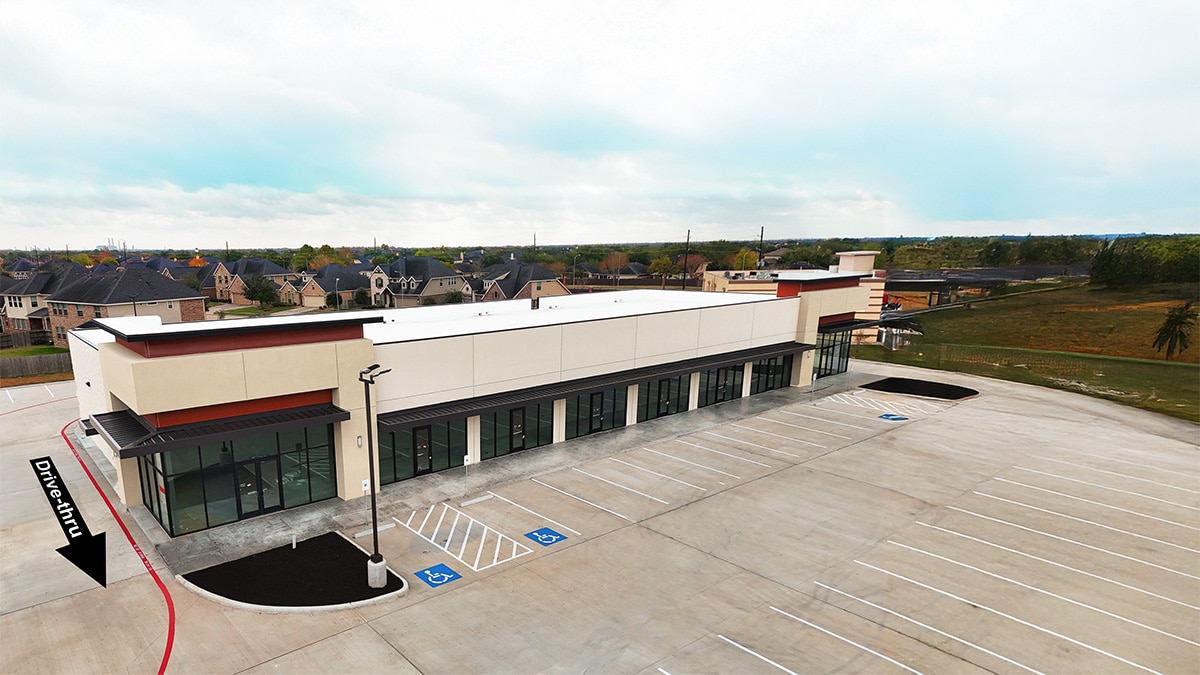
Retail and Shopping Center Roofing in Austin, TX
- About
- Services
- All Services
- Built-Up Roofing Aust
- Commercial Roof Coatings Aust
- Commercial Roof Condition Reporting Aust
- Commercial Roof Inspections Aust
- Commercial Roof Leak Repair Aust
- Commercial Roof Maintenance Aust
- Commercial Roof Repair Aust
- Commercial Roof Replacement Aust
- Commercial Skylight Repair Aust
- EPDM Roofing Aust
- All Roof Systems
- Ballasted Roof Systems Aust
- Built-Up Roof (BUR) Systems Aust
- Cool Roof Systems Aust
- EPDM Roof Systems Aust
- Modified Bitumen Roof Systems Aust
- PVC Roof Systems Aust
- Silicone Roof Coating Systems Aust
- Spray Polyurethane Foam Roof Systems Aust
- Standing Seam Metal Roof Systems Aust
- TPO Roof Systems Aust
- All Industries
- EV Facility Roofing Aust
- Education Facility Roofing Aust
- Entertainment & Music Venue Roofing Aust
- Financial Services Roofing Aust
- Government Facility Roofing Aust
- Healthcare Roofing Aust
- Hospitality & Hotel Roofing Aust
- Logistics & Distribution Roofing Aust
- Semiconductor & Fab Roofing Aust
- Tech Campus Roofing Aust
- All Damage & Repair
- Fire Damage Roof Repair Aust
- Freeze Damage Roof Repair Aust
- Hail Damage Roof Repair Aust
- Insurance Claim Roof Documentation Aust
- Leak Damage Roof Repair Aust
- Storm Damage Roof Repair Aust
- Structural Roof Damage Assessment Aust
- Tornado Damage Roof Repair Aust
- Water Damage Roof Repair Aust
- Wind Damage Roof Repair Aust
- All Property Types
- Distribution Center Roofing Aust
- Manufacturing Facility Roofing Aust
- Medical Building Roofing Aust
- Multifamily Roofing Aust
- Office Building Roofing Aust
- Religious Building Roofing Aust
- Restaurant Roofing Aust
- Retail Roofing Aust
- School Roofing Aust
- Warehouse Roofing Aust
- All Capabilities
- Commercial Roof Condition Reports Aust
- Commercial Roof Inspections Aust
- Commercial Roof Moisture Surveys Aust
- Commercial Roof Zone Mapping Aust
- Competitive Bid Coordination
- Infrared Roof Scanning Aust
- Manufacturer Warranty Management
- Owner Rep Services — Commercial Roofing Aust
- Replacement vs. Recover Analysis Aust
- Roof Asset Management Aust
Commercial roofing for strip malls, shopping centers, anchor stores, and standalone retail buildings throughout Austin, TX.
Austin's retail real estate market has been reshaped by a decade of explosive population growth, with new power centers and lifestyle retail developments appearing along the toll road corridors in Cedar Park, Round Rock, Pflugerville, and the Southwest Austin expansion zones faster than any other major Texas metro. The development velocity has created a market with an unusually wide range of building vintages — from the 1970s and 1980s strip centers along Burnet Road and South Lamar to brand-new construction centered on national retailers at Domain Northside and the Parmer Lane commercial corridor. For property managers handling retail in Travis and Williamson Counties, commercial roofing considerations look very different depending on whether the asset is a legacy neighborhood strip center or a recently constructed regional lifestyle destination, but both carry significant stakes when roofing decisions are made or deferred.
Austin's weather pattern includes the full range of Central Texas extremes: multi-week stretches of temperatures above 100 degrees Fahrenheit in July and August that test roofing membranes at the absolute limits of their thermal performance specifications, severe spring and fall thunderstorms capable of producing hail and high winds across the metro's retail corridors, and the occasional ice storm event — like the February 2021 system — that leaves commercial roofs under ice loads they were not designed to carry. The ice event was a wake-up call for many Austin-area retail property managers who had not thought about freeze risk seriously, and it generated a wave of re-roofing assessments as landlords evaluated whether deferred maintenance had combined with ice loading to create structural and waterproofing vulnerabilities. Commercial roofing in Austin now needs to account for a broader weather risk profile than it did a generation ago.
The energy efficiency argument for reflective roofing is particularly strong in Austin because the city sits near the boundary between Texas's intensive cooling-dominated climate zone and the slightly more moderate Hill Country conditions to the west. Austin Energy, the city's municipal utility, offers rebates for commercial roofing installations that meet energy performance standards, and qualified TPO and PVC membrane systems from approved manufacturers qualify for these programs. For retail property owners managing centers along the Research Boulevard corridor or in the South Congress commercial nodes, the combination of utility rebates and lower ongoing cooling costs creates a measurably better economic case for reflective membrane investment than in markets where energy programs are less structured. Working with a commercial roofer familiar with Austin Energy's commercial program requirements ensures that the installation documentation meets the rebate application standards.
HVAC penetration management on Austin retail roofs is complicated by the extraordinary pace of tenant turnover and new concept introduction that characterizes the city's retail market. Austin's entrepreneurial culture and the influx of national brands attracted by the metro's demographics create a retail environment where tenant spaces are reconfigured and mechanical systems upgraded more frequently than in more stable, slower-growth markets. Each reconfiguration that touches rooftop equipment is an opportunity for inadequate penetration waterproofing, and in a climate where summer heat combined with August afternoon storms can send water through any unprotected opening within hours, the cumulative effect of uncoordinated penetration work is serious. Property managers at Austin retail centers should require landlord approval and designated contractor involvement for any work that involves roof penetration, and that requirement should be clearly and specifically written into every lease.
National retail chains expanding in Austin — and the city's population and demographic profile makes it an extremely active market for new store openings across nearly every retail category — carry roofing specifications that reflect corporate facilities standards. Austin's position as a priority expansion market for many national brands means that local commercial roofers who maintain manufacturer certifications and familiarity with the major chains' approved systems are in genuine demand. Property owners executing build-to-suit projects or major tenant improvement packages in the Domain area or the mixed-use corridors of east Austin need to confirm early that their roofing contractor can satisfy the chain's technical requirements, because discovering a certification gap after lease execution creates costly delays in project timelines that are already tightly managed.
The retail real estate market around the Domain and the Northwest Austin commercial corridor has attracted institutional investors and REITs who bring sophisticated property management expectations. For property managers at centers in this tier of the Austin market, roofing documentation standards are essentially the same as for Class A office: pre-installation condition assessment, competitive bid documentation, contractor qualification verification, manufacturer certification, and post-installation warranty documentation maintained in an organized property file. This documentation standard matters not just for current operations but for the transaction process when these assets trade — Austin retail has been among the most actively transacted commercial real estate in Texas, and buyers' due diligence teams dig into building systems documentation with genuine thoroughness.
Tenant disruption management at Austin retail properties requires sensitivity to the city's distinctive retail and dining culture. The local restaurant tenants, independent retailers, and the mixed-use components of Austin's lifestyle centers represent businesses whose brand identity depends significantly on the customer experience in their physical space. A roofing crew that creates construction noise, unpleasant odors from torch-applied membrane, or parking disruption at an Austin restaurant with a strong local following generates community-level backlash that can find its way onto social media and local food blogs before the property manager even receives the tenant's complaint call. Scheduling coordination with tenant operators — not just building management — and strict protocols for managing noise and odor during roofing work are operational requirements at Austin's more prominent retail locations.
Common area maintenance budget management for Austin retail properties has become more demanding as the city's growth has attracted tenants with sophisticated real estate counsel. Austin's major retail tenants increasingly include both national chains with dedicated CAM audit teams and locally grown concepts that have retained experienced commercial leasing attorneys who know how to use CAM audit rights effectively. Property managers should treat every roofing expenditure as a potential audit item from the day the work is authorized, maintaining documentation that clearly supports the characterization of the expense — routine maintenance, emergency repair, or capital replacement — and that demonstrates the reasonableness of the cost through competitive bidding or market rate documentation.
For commercial real estate investors in the Austin market, the intersection of rapid growth, extreme weather variability, and sophisticated tenant base means that roofing decisions on retail assets carry above-average stakes. The property manager who builds a proactive roofing program — annual inspections, documented condition tracking, planned replacement cycles communicated to owners before the capital need becomes urgent — consistently outperforms those who manage reactively. In a market as dynamic as Austin's, where new retail competition is constantly opening and tenants have genuine options, the physical condition of the building envelope is one of the factors that determines whether a property can hold its occupancy and rental rate as leases roll.
How can I tell if my Austin commercial building's BUR system needs replacement or just repair?
Surface condition alone is not sufficient to answer that question. Alligatoring, surface cracking, and blistering are visible indicators of stress but do not tell you whether the underlying insulation is compromised. Core sampling — pulling drill-cut plugs in five to ten locations across the roof — tells you ply count, asphalt condition through the thickness, and insulation moisture content. That data, combined with drain condition and flashing condition, gives an honest answer on repair versus replacement. We deliver the core data and our interpretation in writing; the building owner makes the capital decision.
Can a BUR roof be coated instead of replaced?
Silicone or acrylic coating over a BUR surface is viable when the system is dry, the surface is clean and primed correctly, and the drain and flashing conditions are sound. Coating a BUR roof with wet insulation or compromised flashings extends the asset's apparent condition without addressing the underlying failure — the coating will delaminate or bridge over wet zones within the first year. We assess before recommending coating; we do not coat roofs that need repair or replacement.
What is the typical cost difference between BUR repair and BUR replacement in Austin?
We do not publish price tables because the variables are too wide — roof size, existing assembly weight, deck condition, number of penetrations, and Austin-area landfill tipping fees all affect the number meaningfully. What we can say is that full BUR tear-off on a large aggregate-surfaced roof in Austin carries higher disposal costs per square than single-ply tear-off because of aggregate weight. We factor that into the recover-versus-replace economic analysis we provide in writing before any contract.
Get a written BUR condition assessment for your Austin building.
Our project managers will walk the roof, pull cores where necessary, and deliver a written report with our honest recommendation on repair, recover, or replacement.
- Mixed Use Roofing
- Storm Damage Roof Repair
- Modified Bitumen Roofing
- Expansion Joint Repair
- Industrial Roofing
- Commercial Reroofing
- Condition Reporting
- About
Leak points, drainage, seams, penetrations, edge metal, roof access, and interior risk should be clear before the next roof decision is priced.
Immediate repair, maintenance, coating, recover, and replacement choices should be measured against roof age, moisture risk, tenant disruption, and budget timing.
A site visit is useful when the owner needs a documented roof condition, active leak response, storm review, or a clearer capital plan.