
Industrial Roofing in Austin, TX
- About
- Services
- All Services
- Built-Up Roofing Aust
- Commercial Roof Coatings Aust
- Commercial Roof Condition Reporting Aust
- Commercial Roof Inspections Aust
- Commercial Roof Leak Repair Aust
- Commercial Roof Maintenance Aust
- Commercial Roof Repair Aust
- Commercial Roof Replacement Aust
- Commercial Skylight Repair Aust
- EPDM Roofing Aust
- All Roof Systems
- Ballasted Roof Systems Aust
- Built-Up Roof (BUR) Systems Aust
- Cool Roof Systems Aust
- EPDM Roof Systems Aust
- Modified Bitumen Roof Systems Aust
- PVC Roof Systems Aust
- Silicone Roof Coating Systems Aust
- Spray Polyurethane Foam Roof Systems Aust
- Standing Seam Metal Roof Systems Aust
- TPO Roof Systems Aust
- All Industries
- EV Facility Roofing Aust
- Education Facility Roofing Aust
- Entertainment & Music Venue Roofing Aust
- Financial Services Roofing Aust
- Government Facility Roofing Aust
- Healthcare Roofing Aust
- Hospitality & Hotel Roofing Aust
- Logistics & Distribution Roofing Aust
- Semiconductor & Fab Roofing Aust
- Tech Campus Roofing Aust
- All Damage & Repair
- Fire Damage Roof Repair Aust
- Freeze Damage Roof Repair Aust
- Hail Damage Roof Repair Aust
- Insurance Claim Roof Documentation Aust
- Leak Damage Roof Repair Aust
- Storm Damage Roof Repair Aust
- Structural Roof Damage Assessment Aust
- Tornado Damage Roof Repair Aust
- Water Damage Roof Repair Aust
- Wind Damage Roof Repair Aust
- All Property Types
- Distribution Center Roofing Aust
- Manufacturing Facility Roofing Aust
- Medical Building Roofing Aust
- Multifamily Roofing Aust
- Office Building Roofing Aust
- Religious Building Roofing Aust
- Restaurant Roofing Aust
- Retail Roofing Aust
- School Roofing Aust
- Warehouse Roofing Aust
- All Capabilities
- Commercial Roof Condition Reports Aust
- Commercial Roof Inspections Aust
- Commercial Roof Moisture Surveys Aust
- Commercial Roof Zone Mapping Aust
- Competitive Bid Coordination
- Infrared Roof Scanning Aust
- Manufacturer Warranty Management
- Owner Rep Services — Commercial Roofing Aust
- Replacement vs. Recover Analysis Aust
- Roof Asset Management Aust
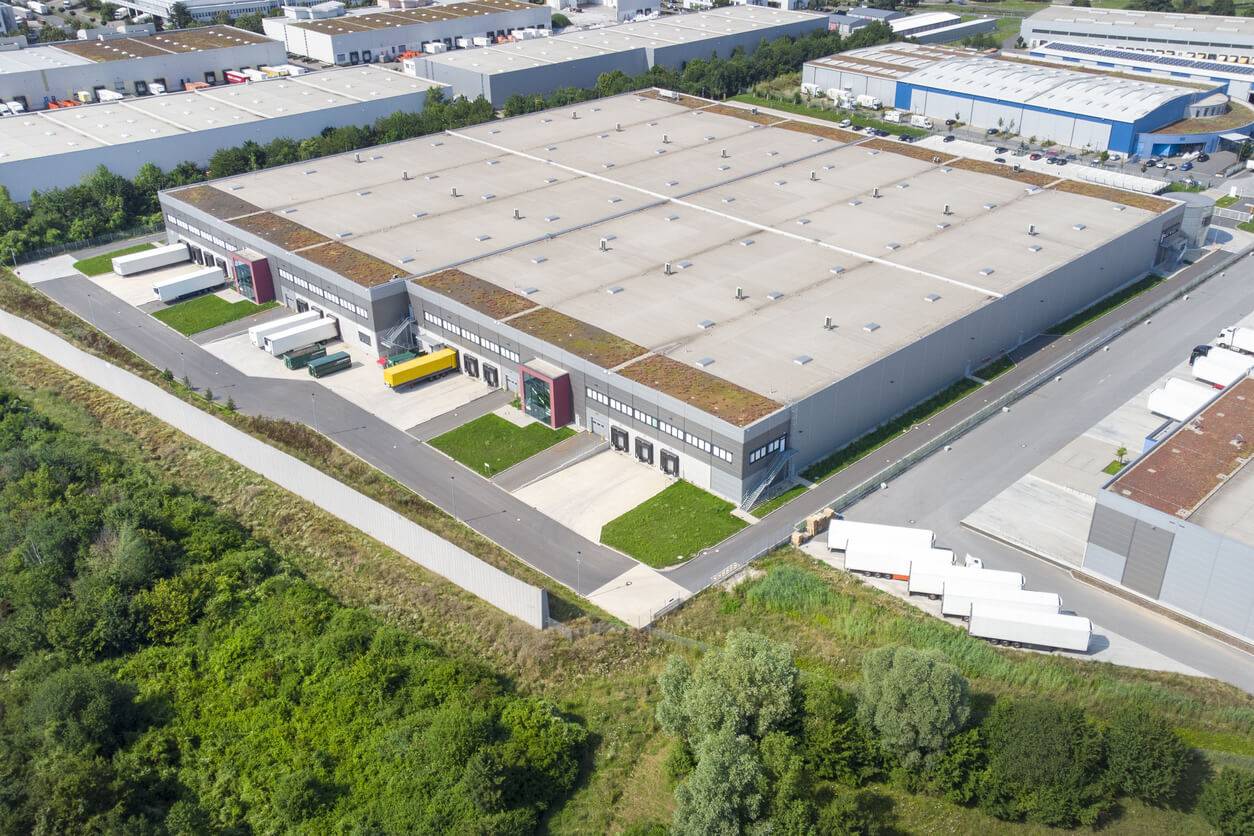
Industrial Roofing for manufacturing facilities, warehouses, and industrial buildings throughout Austin area.
Industrial roofing in Austin has been transformed by the semiconductor and advanced manufacturing investment that has reshaped Central Texas over the past decade. The Tesla Gigafactory Texas near the I-130 corridor in eastern Travis County, Samsung's semiconductor fabrication facility in north Austin, and Applied Materials' operations have brought a category of industrial roofing demand to this market that goes well beyond the distribution warehouses and light manufacturing buildings that defined Austin's industrial base a generation ago. We've grown our capabilities to match that demand, because fab facilities, gigafactories, and precision manufacturing buildings require a level of roofing specification and execution that isn't interchangeable with standard warehouse work.
The Samsung Austin Semiconductor fab on Samsung Boulevard in north Austin is one of the most operationally sensitive roofing environments in Central Texas. Semiconductor fabs run cleanroom manufacturing processes that cannot tolerate any moisture intrusion, and the mechanical and process equipment on those rooftops is extraordinarily dense and valuable. Every penetration through a fab building roof represents a potential contamination pathway, and the flashing details around those penetrations need to be executed with a level of precision that generic commercial roofing contractors aren't equipped to deliver. We approach fab facilities with detailed pre-job documentation, cold-applied or minimally disruptive installation methods in critical zones, and a quality control process that documents every penetration detail with photographs before and after installation.
Tesla's Gigafactory Texas, the largest building by footprint in North America at the time of its construction, is located along the I-130 corridor near the Colorado River. A building of that scale has a rooftop that functions as a small industrial district on its own — multiple HVAC systems serving different production zones, solar arrays, communications infrastructure, and a complex drainage network that has to manage significant volumes of water during the frequent heavy thunderstorms that move through Central Texas. We've worked on large-scale industrial facilities in this corridor and understand the project management complexity that comes with buildings where a single roof section can be the size of a neighborhood block.
The Austin-Bergstrom International Airport industrial area has grown substantially as the city's global connectivity has expanded. The cargo and logistics facilities along Presidential Boulevard and the airport perimeter house freight forwarders, air cargo handlers, and regional distribution operations that require the same operational sensitivity in roofing work as airport-adjacent facilities anywhere. We coordinate with the airport authority and follow the established protocols for crane operations and work scheduling near active runway corridors. The industrial tenants in that area operate in a competitive logistics environment where building downtime is a cost, and we organize our work to minimize that exposure.
Austin's climate presents a challenging combination for industrial roofing: 33 inches of annual rainfall concentrated in spring and fall thunderstorm events, summer temperatures that regularly exceed 100°F and push rooftop surface temperatures above 160°F, and occasional winter freeze events that arrive suddenly and can strand crews and materials. The thermal cycling between an August afternoon at 165°F on the membrane surface and a January night at 20°F is significant, and it stresses flashings and seam adhesion in ways that more moderate climates don't. We specify for the full temperature range, not just the seasonal average.
For new industrial construction in the Austin market — the tech manufacturing corridor along US-183 and the Domain area, the logistics and distribution facilities along I-35 North and South, and the Hays County industrial development south of the city — we work primarily with 60-mil TPO and PVC single-ply systems that meet CRRC reflectance requirements for Texas's hot climate zone. Polyiso insulation at values that exceed energy code minimums provides meaningful lifecycle cost savings in a climate where cooling loads dominate. On manufacturing and process facilities with special requirements, we work with project design teams from the specification stage to ensure that the roof assembly integrates properly with the building's HVAC, vapor management, and structural systems.
The I-35 logistics spine running north-south through Austin connects the city's industrial market to the Dallas-Fort Worth distribution network on one end and the San Antonio manufacturing corridor on the other. The distribution and cross-dock facilities along that corridor represent high-volume, high-reliability operations where roof maintenance isn't optional — it's part of how these buildings maintain their REIT investment grade status. We work with property management companies that oversee multiple I-35 corridor assets on standardized maintenance programs that include consistent inspection protocols, standardized documentation, and coordinated capital planning for buildings approaching re-roofing age.
Applied Materials and the cluster of semiconductor equipment manufacturers around north Austin's tech corridor have specific roofing requirements driven by the sensitivity of the manufacturing processes inside. Equipment that is calibrated to micron-scale tolerances cannot tolerate moisture intrusion, particulate contamination from deteriorating roofing materials, or vibration from poorly secured rooftop equipment. We understand the sensitivity of these environments and our maintenance visits include specific attention to any conditions that could introduce contaminants — membrane surface granule loss, deteriorating sealant that could fragment, or equipment flashing conditions that might allow particulate infiltration through penetrations.
Austin's rapid growth has created a construction labor market where finding qualified roofing crews is genuinely competitive. We've invested in the training and retention programs that keep experienced installers on our crews rather than cycling through the transient labor pool that some contractors rely on. On a fab facility or gigafactory-adjacent project, installer experience isn't a preference — it's a requirement. An installer who has never worked on a cleanroom building's roof doesn't know what they don't know, and the consequences of that gap show up in flashings that aren't right and penetration details that don't hold. Our crews are experienced in the full range of Austin industrial facility types because we've built the team to match the work this market demands.
Maintenance programs for Austin industrial clients focus heavily on the spring-and-fall heavy rain periods and the transition from summer heat to winter cold. Inspections in April confirm that winter weather hasn't compromised any flashings and that drains are clear heading into spring storm season. Fall inspections in October prepare roofs for the occasional severe winter event and address any summer heat damage at HVAC curbs and around solar equipment. For tech manufacturing facilities, we recommend quarterly inspections because the value of the process and equipment inside those buildings makes the cost of a roof failure dramatically higher than the preventive maintenance investment.
The defining differences are the zero-tolerance for moisture intrusion, the complexity and value of rooftop mechanical equipment, and the operational continuity requirements. A fab cannot stop production for a leak investigation — the economic cost of cleanroom contamination or process interruption is measured in millions of dollars per incident. We approach fab facilities with detailed pre-job planning that identifies every penetration and its criticality, phased installation sequences that maintain dry conditions throughout, cold-applied or minimally disruptive installation methods near operational areas, and documentation that verifies every detail was installed correctly. The inspection and sign-off process at the end of a fab roofing project is more rigorous than any other building type we work on.
Surface temperature on a dark or gray membrane in an Austin summer can exceed 170°F — well above the rated performance range for some products and at the high end for others. We specify white or light-colored membranes as standard on Austin industrial roofs, both for energy compliance and for membrane longevity. Beyond color, we look at the membrane's high-temperature performance ratings and specify products with validated performance at sustained elevated temperatures. At HVAC curbs and in penetration flashings, we avoid products with low softening points. The modified bitumen cap sheets we use in two-ply applications for Austin have granule surfacing and high-temperature rated bitumen formulations specifically because of this climate.
The 2021 Winter Storm Uri was a wake-up call for industrial facility operators throughout Central Texas about the vulnerability of buildings that weren't designed or maintained with hard-freeze conditions in mind. Our fall maintenance protocol now includes confirming that roof drains have functional access, that any heat tape on critical drains is operational, and that overflow scuppers are clear. We also recommend that any building with exposed rooftop water lines — including HVAC condensate drains and domestic water supply penetrations through the roof — have freeze protection confirmed before November. For buildings with active production processes, we provide emergency response availability during significant freeze events to inspect and respond to any freeze-related roof failures.
Buildings at gigafactory scale require roofing project management at a scale most contractors haven't experienced. A single roof on a building of that size can involve 1 million or more square feet, dozens of rooftop mechanical systems, multiple building sections with different construction phases, and thousands of penetrations. We approach large-scale industrial projects with full-time on-site project management, phased work plans that divide the roof into manageable sections with clear sequencing, dedicated material staging areas designed around the building's operational logistics, and daily production tracking against schedule. On projects of this magnitude, quality control documentation — daily installation logs, weld testing records, inspection reports — is as important as the installation itself.
For a properly specified and installed TPO or PVC system on a new Austin industrial building, manufacturer's warranties in the 20-year NDL (No-Dollar-Limit) range are available from the major manufacturers. Those warranties require manufacturer authorization for the installing contractor, mandatory pre-job submittal approval, in-progress inspections by manufacturer representatives, and a final inspection before the warranty is issued. We are authorized installers for the major membrane manufacturers in this market, and we manage the warranty process from submittal through final issuance as a standard component of every warranted project. Contractors who aren't authorized cannot provide these warranties regardless of what they promise at bid time.
How can I tell if my Austin commercial building's BUR system needs replacement or just repair?
Surface condition alone is not sufficient to answer that question. Alligatoring, surface cracking, and blistering are visible indicators of stress but do not tell you whether the underlying insulation is compromised. Core sampling — pulling drill-cut plugs in five to ten locations across the roof — tells you ply count, asphalt condition through the thickness, and insulation moisture content. That data, combined with drain condition and flashing condition, gives an honest answer on repair versus replacement. We deliver the core data and our interpretation in writing; the building owner makes the capital decision.
Can a BUR roof be coated instead of replaced?
Silicone or acrylic coating over a BUR surface is viable when the system is dry, the surface is clean and primed correctly, and the drain and flashing conditions are sound. Coating a BUR roof with wet insulation or compromised flashings extends the asset's apparent condition without addressing the underlying failure — the coating will delaminate or bridge over wet zones within the first year. We assess before recommending coating; we do not coat roofs that need repair or replacement.
What is the typical cost difference between BUR repair and BUR replacement in Austin?
We do not publish price tables because the variables are too wide — roof size, existing assembly weight, deck condition, number of penetrations, and Austin-area landfill tipping fees all affect the number meaningfully. What we can say is that full BUR tear-off on a large aggregate-surfaced roof in Austin carries higher disposal costs per square than single-ply tear-off because of aggregate weight. We factor that into the recover-versus-replace economic analysis we provide in writing before any contract.
Get a written BUR condition assessment for your Austin building.
Our project managers will walk the roof, pull cores where necessary, and deliver a written report with our honest recommendation on repair, recover, or replacement.
- Condition Reporting
- Multifamily Roofing
- Occupied Building Reroofing
- Commercial Roof Repair
- Infrared Moisture Scanning
- Warehouse Roofing
- Single Ply Roofing
- About
Leak points, drainage, seams, penetrations, edge metal, roof access, and interior risk should be clear before the next roof decision is priced.
Immediate repair, maintenance, coating, recover, and replacement choices should be measured against roof age, moisture risk, tenant disruption, and budget timing.
A site visit is useful when the owner needs a documented roof condition, active leak response, storm review, or a clearer capital plan.