
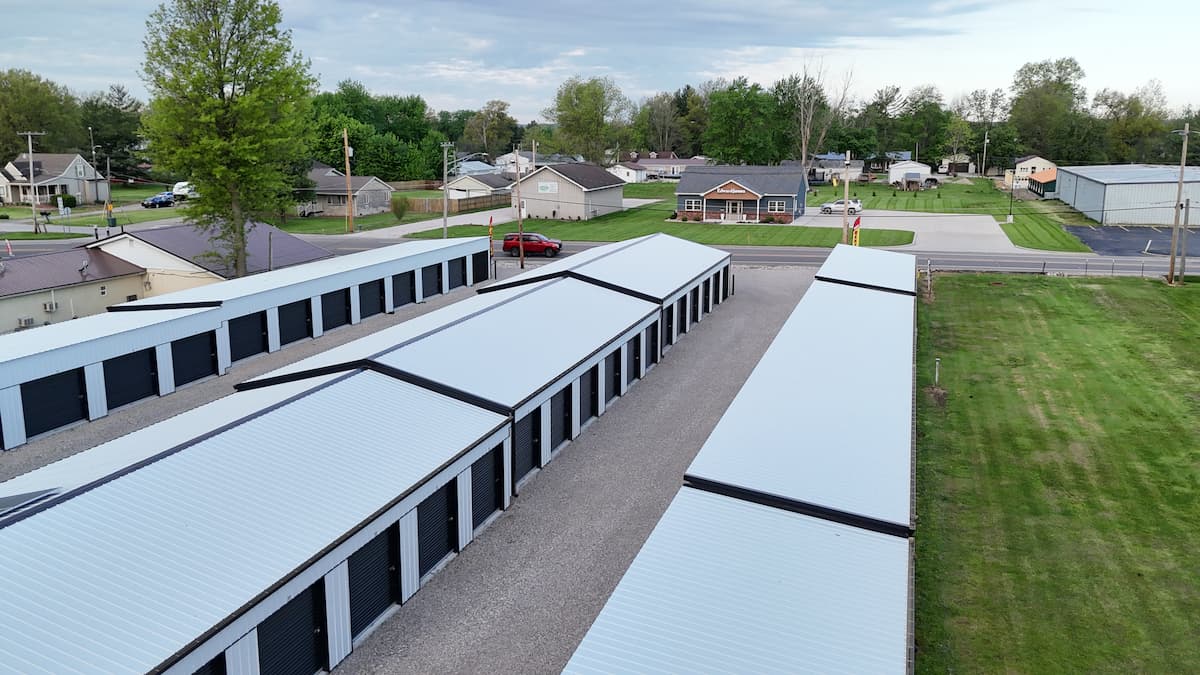
Self-Storage Facility Roofing in Austin, TX
- About
- Services
- All Services
- Built-Up Roofing Aust
- Commercial Roof Coatings Aust
- Commercial Roof Condition Reporting Aust
- Commercial Roof Inspections Aust
- Commercial Roof Leak Repair Aust
- Commercial Roof Maintenance Aust
- Commercial Roof Repair Aust
- Commercial Roof Replacement Aust
- Commercial Skylight Repair Aust
- EPDM Roofing Aust
- All Roof Systems
- Ballasted Roof Systems Aust
- Built-Up Roof (BUR) Systems Aust
- Cool Roof Systems Aust
- EPDM Roof Systems Aust
- Modified Bitumen Roof Systems Aust
- PVC Roof Systems Aust
- Silicone Roof Coating Systems Aust
- Spray Polyurethane Foam Roof Systems Aust
- Standing Seam Metal Roof Systems Aust
- TPO Roof Systems Aust
- All Industries
- EV Facility Roofing Aust
- Education Facility Roofing Aust
- Entertainment & Music Venue Roofing Aust
- Financial Services Roofing Aust
- Government Facility Roofing Aust
- Healthcare Roofing Aust
- Hospitality & Hotel Roofing Aust
- Logistics & Distribution Roofing Aust
- Semiconductor & Fab Roofing Aust
- Tech Campus Roofing Aust
- All Damage & Repair
- Fire Damage Roof Repair Aust
- Freeze Damage Roof Repair Aust
- Hail Damage Roof Repair Aust
- Insurance Claim Roof Documentation Aust
- Leak Damage Roof Repair Aust
- Storm Damage Roof Repair Aust
- Structural Roof Damage Assessment Aust
- Tornado Damage Roof Repair Aust
- Water Damage Roof Repair Aust
- Wind Damage Roof Repair Aust
- All Property Types
- Distribution Center Roofing Aust
- Manufacturing Facility Roofing Aust
- Medical Building Roofing Aust
- Multifamily Roofing Aust
- Office Building Roofing Aust
- Religious Building Roofing Aust
- Restaurant Roofing Aust
- Retail Roofing Aust
- School Roofing Aust
- Warehouse Roofing Aust
- All Capabilities
- Commercial Roof Condition Reports Aust
- Commercial Roof Inspections Aust
- Commercial Roof Moisture Surveys Aust
- Commercial Roof Zone Mapping Aust
- Competitive Bid Coordination
- Infrared Roof Scanning Aust
- Manufacturer Warranty Management
- Owner Rep Services — Commercial Roofing Aust
- Replacement vs. Recover Analysis Aust
- Roof Asset Management Aust
Commercial roofing for self-storage facilities, mini-storage buildings, and climate-controlled storage properties throughout Austin, TX.
StorageMart operates several self-storage locations across Austin, Texas, serving the city's rapidly expanding residential base and the small business community that has grown alongside Austin's technology sector boom. Austin's self-storage market has been under sustained demand pressure as the city's population has grown by hundreds of thousands over the past decade — with that growth concentrated in apartment-heavy neighborhoods where residents lack storage space. Roofing these facilities in Austin means contending with one of the most physically demanding climates for flat-roof systems in North America: intense summer heat, unexpected freeze events, severe thunderstorms, and the ever-present hail season.
Austin's summer climate puts flat roofing systems under extraordinary thermal stress. Temperatures regularly exceed 100°F from June through August, and rooftop surface temperatures on dark membranes can exceed 180°F under direct sun. White TPO has largely displaced other membrane options on new and replacement roofing in Austin because of its heat-reflective properties, which reduce both membrane degradation and the cooling energy costs of climate-controlled storage buildings. Texas energy code and Austin Energy's commercial building efficiency programs both incentivize cool roof specifications, creating a policy alignment with the practical performance advantages of reflective membranes.
Austin's infamous freeze events — most dramatically illustrated by Winter Storm Uri in 2021 — have changed how commercial roofing contractors think about system resilience in Central Texas. A roofing system designed for the heat extremes of an Austin summer also needs to handle the sudden freeze events that the city now experiences with greater regularity. Membrane materials that become brittle at temperatures below 20°F, seam sealants that lose adhesion in rapid temperature drops, and drainage systems that allow ice to form over drain bodies are all points of failure that Austin-area storage operators discovered during Uri. Contractors now discuss freeze resilience explicitly in system specifications for Travis County storage projects.
Climate-controlled storage has become a baseline expectation in Austin's upscale residential neighborhoods and tech-adjacent business districts. Tenants store electronics, wine, art, and sensitive business equipment. The roofing insulation assembly for these buildings needs to maintain interior temperatures within a narrow band year-round — not just through summer heat but through the freeze events and wide spring temperature swings that characterize Austin's transitional seasons. Vapor management is also more complex in Austin than in drier Texas markets because the city's proximity to the Gulf of Mexico delivers periodic high-humidity air masses that can condense moisture in poorly designed roof assemblies.
Tenant belongings protection in Austin is complicated by the hail season that extends from March through June. Travis County receives hail damage events regularly, and several major hail storms in recent years have caused hundreds of millions in property damage across the metro. A storage facility with an active roofing project during hail season faces a dual risk: the buildings being actively worked on may have exposed sections, while completed buildings face normal hail impact risk to the new membrane. Contractors on Austin storage projects during hail season should specify Class 3 or Class 4 impact-resistant membranes and maintain emergency tarp protocols for active work sections.
Austin's rapid growth has created significant strain on the city's development permitting systems, and commercial roofing permits for storage facilities can experience multi-week review delays during peak activity periods. Experienced Austin commercial roofers budget substantial lead time for permit acquisition and often begin the permitting process weeks before planned mobilization. Storage operators who hire contractors without this local experience sometimes find their projects stalled at permit intake, delaying planned improvements and creating cash flow complications.
Security penetrations at Austin storage facilities reflect the tech-forward character of the local market. Some Austin-area facilities have integrated IoT-enabled security systems with more penetration points than traditional camera-and-lighting setups. Smart lock systems, sensor networks, and data communication conduits all penetrate the roof membrane at multiple points. A contractor unfamiliar with the full scope of a modern storage security infrastructure may miss penetrations during a re-roofing project, creating post-completion leak points in locations that were not on the original project drawings.
Drainage design for Austin storage campuses needs to account for the intensity of Texas Hill Country thunderstorms. The Onion Creek watershed and other Austin-area drainage systems have flooded repeatedly in recent decades during extreme rainfall events. While rooftop drainage design cannot prevent regional flooding, it can prevent storage facilities from becoming collection points for water during intense storms. Drain sizing based on Austin's 100-year storm intensity, coupled with overflow scuppers positioned well below the roof edge level, provides the redundancy that Austin storage operators have learned to value.
Austin's commercial roofing contractor market is competitive and includes national firms, regional operators, and local contractors. The city's rapid growth has also attracted less experienced operators chasing volume, which has increased the variability in roofing quality across the market. Storage operators conducting competitive bidding should require verifiable references from comparable Austin-area storage facility projects, not just general commercial references. The combination of Austin's climate extremes — summer heat, freeze events, hail, and intense thunderstorms — means that local experience is a genuine differentiator in contractor quality.
How can I tell if my Austin commercial building's BUR system needs replacement or just repair?
Surface condition alone is not sufficient to answer that question. Alligatoring, surface cracking, and blistering are visible indicators of stress but do not tell you whether the underlying insulation is compromised. Core sampling — pulling drill-cut plugs in five to ten locations across the roof — tells you ply count, asphalt condition through the thickness, and insulation moisture content. That data, combined with drain condition and flashing condition, gives an honest answer on repair versus replacement. We deliver the core data and our interpretation in writing; the building owner makes the capital decision.
Can a BUR roof be coated instead of replaced?
Silicone or acrylic coating over a BUR surface is viable when the system is dry, the surface is clean and primed correctly, and the drain and flashing conditions are sound. Coating a BUR roof with wet insulation or compromised flashings extends the asset's apparent condition without addressing the underlying failure — the coating will delaminate or bridge over wet zones within the first year. We assess before recommending coating; we do not coat roofs that need repair or replacement.
What is the typical cost difference between BUR repair and BUR replacement in Austin?
We do not publish price tables because the variables are too wide — roof size, existing assembly weight, deck condition, number of penetrations, and Austin-area landfill tipping fees all affect the number meaningfully. What we can say is that full BUR tear-off on a large aggregate-surfaced roof in Austin carries higher disposal costs per square than single-ply tear-off because of aggregate weight. We factor that into the recover-versus-replace economic analysis we provide in writing before any contract.
Get a written BUR condition assessment for your Austin building.
Our project managers will walk the roof, pull cores where necessary, and deliver a written report with our honest recommendation on repair, recover, or replacement.
- Office Building Roofing
- Commercial Reroofing
- TPO Roofing
- Roof Inspections
- Built Up Roofing
- Healthcare Facility Roofing
- Expansion Joint Repair
- About
Leak points, drainage, seams, penetrations, edge metal, roof access, and interior risk should be clear before the next roof decision is priced.
Immediate repair, maintenance, coating, recover, and replacement choices should be measured against roof age, moisture risk, tenant disruption, and budget timing.
A site visit is useful when the owner needs a documented roof condition, active leak response, storm review, or a clearer capital plan.